Did Republicans Actually Defund the Police?

No, Republicans did not defund the police. When Chris Wallace, host of Fox News Sunday, asked Congressman Jim Banks (R-IN) if it is actually the Republicans who are defunding the police I was floored (Pengelly, 2021). This line of questioning comes from the fact that the Republicans voted against the American Rescue Plan. The plan included $350 billion that will go to local governments that could then be used fund police related activities (Pengelly, 2021). Of course, this line of questioning caught Congressman Banks off guard, and he proceeded to fumble his way through a few vaguely related talking points. I don’t want to go into how Chris Wallace was essentially doing the bidding of the Democrat party during this interview, but I will go into how completely unfounded these questions were.

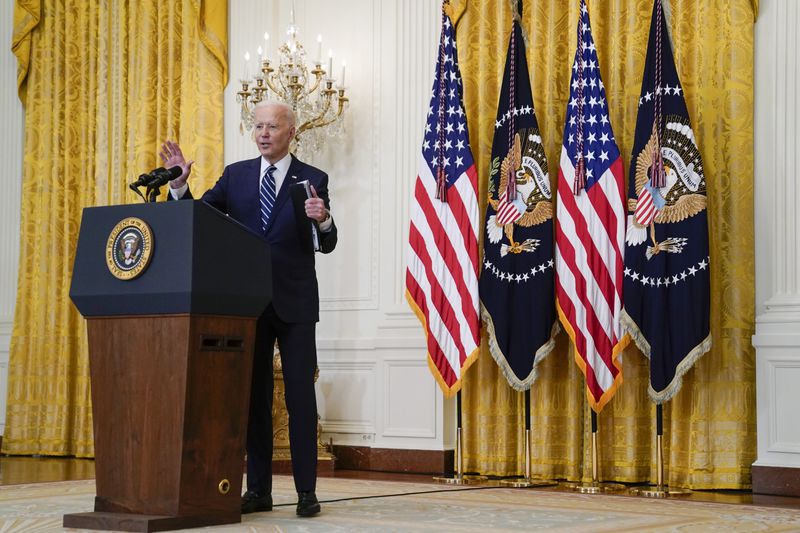
President Joe Biden in a recent town hall was asked about Republicans pushing the narrative that Democrats, including President Biden, want to defund the police. He responded quickly with “They’re lying” (Gangitano, 2021). He then discussed the idea of reforming the police. Specifically, changing police conduct, determining what happens if a police officer or department violates rules, and access for the Justice Department to be able to investigate wrongdoing (Gangitano, 2021). President Biden then went on to highlight his commitment to investing in police to combat crime (Gangitano, 2021). Let’s ignore the fact that just last year while on the campaign trial President Biden said “Yes, absolutely” when asked if he agrees that police funding can be redirected (Miller, 2021). Of course, he was just looking for votes then and didn’t really mean what he was saying. He really does support police departments. Let’s ignore his support for local, state, and federal politicians who are in favor of defunding the police. He doesn’t agree with them on defunding the police, just every other issue. I mean, that $350 billion is a lot of money that local governments may spend on police departments. I will emphasize the word may in that sentence. There is no way to know how much of that money will eventually go to police departments. Considering a big percentage of that money went to big cities that are controlled by Democrats I assume the amount of money going into policing is low.

Outside of this one-time cash infusion that Democrats recklessly poured into every level of government what have Democrats, and specifically President Biden, done to support local police departments? Nothing would be an understatement. Enthusiastically destroying entire police departments would be a better characterization. They do this through the process of consent decrees. Consent decrees are employed through the Department of Justice (DOJ) (Criminal Justice Programs, 2017). The DOJ will investigate police departments to determine if there is any evidence of systematic abuse (Criminal Justice Programs, 2017).  If the DOJ finds there is evidence of abuse they will draft a consent decree which will outline what reforms the police department must comply with to correct the abuse that the DOJ observes (Criminal Justice Programs, 2017). Once the decree is finalized, it then goes before a federal judge for approval and a federal monitor is assigned to oversee the reform process (Criminal Justice Programs, 2017). This may seem like a process that works to hold police departments accountable, but in practice it works to federalize police departments. Consent decrees work to strip police departments of their ability to effectively police their communities. Often times, after a consent decree is enacted, violent crime and murder rates increase. President Biden’s administration has reinstated pursuing consent decrees after President Trump’s administration moved away from the practice. Recently, the DOJ under President Biden opened investigations into the Louisvlle Metro Police Department and the Minneapolis Police Department. These investigations have yet to be completed, so I will focus on some of the consent decrees that were approved during President Barack Obama’s administration when President Biden was vice-president. Specifically, I will focus on Albuquerque, Cleveland, Baltimore, and St. Louis.

In 2014, the Albuquerque Police Department (APD) entered into a Court Approved Settlement Agreement with the DOJ. The DOJ had found that officers within the APD had a pattern and practice of excessive force (Kaplan, 2021). This agreement was a consent decree where the city agreed to make 300 policy changes to the department (Wilham, 2021). In addition to the policy changes, the agreement consisted of $20 million for training, staffing, and a monitor (Wilham, 2021). Since the consent decree was enacted Albuquerque has seen a 53% increase in violent crime, murders, rapes, robberies and aggravated assaults (Wilham, 2021).

In 2015, the city of Cleveland settled into a consent decree with the DOJ (Graham, 2015). The decree required Cleveland cops to reform their behavior, and demanded that they document encounters, to ensure that they’re meeting the standards laid out. (Graham, 2015). Officers were barred from using retaliatory violence, and were trained in de-escalation tactics (Graham, 2015). This decree came after an investigation found that the Cleveland Police Department used unnecessary and excessive use of deadly force; used unnecessary, excessive or retaliatory use of less lethal force; used excessive force against persons who are mentally ill or in crisis; and employed poor and dangerous tactics that placed officers in situations where avoidable force became inevitable (Graham, 2015). It appears that the DOJ is just interested in fixing a broken and abusive police department. So, it is okay that Cleveland saw 177 homicides in 2020, up 44% from last year and 136% in the past decade (WKYC, 2021).

In 2016, the city of Ferguson, Missouri (St. Louis) entered a consent decree following the death of Michael Brown in 2014. An investigation found patterns of racial bias in policing and a municipal court system that generated revenue largely from poor and minority residents (Alexander, 2016). The decree mandated that Ferguson police officers undergo bias-awareness training and that the department implement an accountability system (Alexander, 2016). Since this decree has been in effect violent crime and murders have been on the rise in Ferguson (City Data, 2021).

Finally, in 2017, Baltimore entered into a consent decree with the DOJ (Domonoske, 2017). The decree instructed police to use de-escalation tactics before resorting to violence and called for police to be instructed on implicit bias and victim-centered practices (Domonoske, 2017). The consent decree came after a report identified widespread racial bias, use of excessive force, repeated patterns of unconstitutional arrests and hostility towards women and LGBT civilians, as well as other civil rights violations (Domonoske, 2021). In 2020, the city of Baltimore saw 335 murders, which is flat since the consent decree took place (Baltimore Sun, 2021). Though, the number of homicides is up around 33% since the event that led to the consent decree took place (Baltimore Sun, 2021).

This increase in violent crime and homicide doesn’t paint the entire picture, but it is a brush stroke. It becomes apparent that there is a problem in a few select localities when you look at the violent crime and murder rates in the entire United States. In the past 10 years violent crime across the United States has seen a decrease of ~10% (Statista, 2021). Additionally, since 2010 the homicide rate has been basically flat across the United States (Macrotrends, 2021).

These consent decrees do have their positives. There are abuses that need to be fixed in police departments. Fixing those abuses should be a priority in every community, but more government is usually not the best solution. Law enforcement officials who have been through this process say it results in political fallout and deep divisions (Swanson, 2021). DOJ oversight handcuffs officers, forcing them into internal investigations that take time away from policing streets in the midst of record-breaking violent crime (Swanson, 2021). Trying to fix abuses within police departments is a noble goal, but the rising crime that follows in these cities don’t justify the little effect that these investigations and subsequent consent decrees usually have.

There is always the possibility that if these consent decrees are really that detrimental local police departments can fight this battle in court. These police departments don’t have to accept the consent decrees from the DOJ. But, with a $35.3 billion dollar budget, the amount in the DOJ’s 2021 budget request, the DOJ has unlimited resources to compel police departments into consent decrees or face unlimited litigation expenses (Government Investigations, 2021). To put that amount of money in perspective, the entire Indiana budget is $35 billion over two-years. Of course, this only happens in select police departments nationwide. The DOJ only goes after police departments with demonstrated abuses and are violating federal statutes. That doesn’t stop Congress, controlled by Democrats, from taking this practice nationwide.

In 2020, after the murder of George Floyd, Democrats in Congress released a number of proposals that they thought would help address issues around police misconduct. It did not matter if statistics did not support their mission of destroying the policing institution. At the time, Democrats were hellbent on virtue signaling to their base. The original proposal would have allowed victims of misconduct to sue police for damages, banned chokeholds, required the use of body cameras by federal law enforcement officers, restricted the use of lethal force, and facilitated independent investigations of police departments that show patterns of misconduct (Morgan, 2020). Most of this is cookie cutter language from consent decrees nationwide. I want to iterate that I don’t disagree with the entire proposal. Mandating body cameras nationwide is a good idea. Investigations are not bad in theory, but as I have explained the way the federal government conducts investigations is detrimental for local police departments. At the time, Republicans controlled the Senate, so this proposal was dead on arrival. Recently, the House of Representatives passed a bill that would prohibit racial and religious profiling by law enforcement at every level, ban chokeholds at the federal level, ban no-knock warrants in federal drug cases, eliminate qualified immunity for law enforcement, mandate data collection on police encounters and create a nationwide police misconduct registry to hold accountable problematic officers who are fired or leave an agency (McCaskill, 2021). Again, I don’t disagree with every portion of this bill. Prohibiting profiling is a good thing. Data collection on bad police officers is a good thing, but as a general principle I get a little uneasy when the idea of a registry is proposed. Of course, the federal government knows that locals will not want to implement a majority of these policies. So, the federal policies would be tied to law enforcement funding for governments at the state and local levels (McCaskill, 2021). Obviously, state and local governments don’t know how to best handle their communities. Force feeding localities federal policies by threatening to cut funding is a great idea. Luckly, the Senate is split 50/50 and the Democrats are not willing to blow up the filibuster to pass this legislation.

Just because Democrats in Congress can’t achieve their goal of federalizing local police departments, doesn’t mean local governments let the last year go to waste. New York City, Seattle, Minneapolis and Atlanta have called to increase accountability, crackdown on racial profiling and are testing the use of mental health crisis responders. (Bernstein, 2021). According to New York City, increasing accountability must mean defunding the police. New York City Mayor Bill de Blasio (D-NY) pledged to cut funding for the New York Police Department and that ended up being a $1 billion budget cut from the $6 billion budget (Wise, 2020). That is almost a 20% budget cut in a year in which cities have seen a flood of funding. Short of cutting funding, former Los Angeles Mayor Eric Garcetti (D-CA) threw out plans for a police budget hike (Brewster, 2020). Garcetti is now an ambassador in President Biden’s administration.

Finally, you have all the great things that elected Democrats like to express about police departments. Democrat darling Congresswoman Alexandia Ocasio-Cortez (AOC) (D-NY) was quoted saying “Defunding police means defunding police” (Moreno, 2020). AOC did not think that the $1 billion cut in the New York Police Department budget was enough and it only tiptoed around the demands of activists (Moreno, 2020). Fellow New York Democrat, Senate Minority Chuck Schumer (D-NY) blocked a resolution opposing defunding the police. Senator Schumer argued that the resolution was rhetoric. Senator Schumer went on to try to pass a resolution that would require the Senate to take up the Democratic police reform bill as soon as it passed the House. (Carney, 2020). I guess his motto is rhetoric for thee and not for me.

Obviously, it is not Republicans that are defunding the police or want to defund the police. I wouldn’t even say most Democrats want to defund the police. Most citizens support their local police departments. There is a certain percentage of the Democrat base that supports the idea of defunding the police and the leaders of the Democrat party realized they needed support from that group to be elected at a national level last year. The election is in the rearview mirror and now you see Democrats and President Biden largely backing away from that idea. It is such an unpopular idea they even tried to buck the blame off on Republicans. I hope everyone can see through the façade.

Sources

Alexander, J. (2016, April 20). US judge approves police reform in flashpoint city of Ferguson. DW. https://www.dw.com/en/us-judge-approves-police-reform-in-flashpoint-city-of-ferguson/a-19199818

Associated Press. (2017, April 5). Do federal overhauls of local police forces actually work? WFTS Tampa Bay. https://www.abcactionnews.com/news/national/do-federal-overhauls-of-local-police-forces-actually-work

Baltimore Sun. (2021, September 4). BALTIMORE HOMICIDES. https://homicides.news.baltimoresun.com/

Bernstein, L. (2021, April 19). States, cities lead on police reform given federal government’s limited reach. NBC Montana. https://nbcmontana.com/news/nation-world/states-cities-lead-on-police-reform-given-federal-governments-limited-reach

Brewster, J. (2020, June 4). LA Mayor Slashes LAPD Budget As Calls To ‘Defund Police’ Slowly Pick Up Steam. Forbes. https://www.forbes.com/sites/jackbrewster/2020/06/04/la-mayor-slashes-lapd-budget-as-calls-to-defund-police-slowly-pick-up-steam/?sh=2488cf2b1ba3

Carney, J. (2020, June 10). Schumer blocks resolution opposing calls to defund police. The Hill. https://thehill.com/homenews/senate/502169-schumer-blocks-resolution-opposing-calls-to-defund-police

City Data. (n.d.). Crime rate in St. Louis, Missouri (MO): murders, rapes, robberies, assaults, burglaries, thefts, auto thefts, arson, law enforcement employees, police officers, crime map. https://www.city-data.com/crime/crime-St.-Louis-Missouri.html

Criminal Justice Programs. (n.d.). What Are Consent Decrees? https://www.criminaljusticeprograms.com/articles/what-are-consent-decrees/

Domonoske, C. (2017, January 12). Baltimore, DOJ Reach Agreement On Consent Decree For Baltimore Police. NPR. https://www.npr.org/sections/thetwo-way/2017/01/12/509479934/baltimore-doj-reach-agreement-on-consent-decree-for-baltimore-police

Gangitano, A. (2021, July 21). Biden: Republicans who say Democrats want to defund the police are lying. The Hill. https://thehill.com/homenews/administration/564257-biden-republicans-who-say-democrats-want-to-defund-the-police-are

Government Investigations. (2021, June 1). DOJ Releases Its 2022 Budget Request. Chilivis Grubman Dalbey & Warner LLC. https://cglawfirm.com/2021/06/01/doj-releases-its-2022-budget-request/

Graham, D. (2015, May 26). Can the Feds Clean Up Cleveland’s Police Force? The Atlantic. https://www.theatlantic.com/politics/archive/2015/05/cleveland-consent-decree/394085/

Kaplan, E. (2021, February 14). City, DOJ agree on outside team to help oversee APD. Albuquerque Journal. https://www.abqjournal.com/2359745/city-doj-agree-on-outside-team-to-help-oversee-apd.html

Macrotrends. (n.d.). U.S. Murder/Homicide Rate 1990-2021. https://www.macrotrends.net/countries/USA/united-states/murder-homicide-rate

McCaskill, N. (2021, March 3). House passes police reform bill. Politico. https://www.politico.com/news/2021/03/03/house-passes-police-reform-bill-473476

Miller, A. M. (2021, July 21). Biden claims GOP is ‘lying’ about Democrats wanting to defund police, says he’s never supported it. Fox News. https://www.foxnews.com/politics/biden-claims-gop-is-lying-about-democrats-wanting-to-defund-police-says-hes-never-supported-it

Moreno, E. (2020, June 30). Ocasio-Cortez dismisses proposed $1B cut: ‘Defunding police means defunding police’. The Hill. https://thehill.com/homenews/house/505307-ocasio-cortez-dismisses-proposed-1b-cut-defunding-police-means-defunding

Morgan, D. (2020, June 8). U.S. Democrats pledge transformative change with police reform bill. Reuters. https://www.reuters.com/article/us-minneapolis-police-congress-idUSKBN23F2OI

Pengelly, M. (2021, June 28). ‘Republicans are defunding the police’: Fox News anchor stumps congressman. The Guardian. https://www.theguardian.com/media/2021/jun/28/chris-wallace-republicans-defunding-the-police-fox-news-congressman-jim-banks

Statista. (2021, July 5). Reported violent crime rate in the United States from 1990 to 2019. https://www.statista.com/statistics/191219/reported-violent-crime-rate-in-the-usa-since-1990/

Swanson, K. (2021, July 8). Policing the Blue: Resistance to change from officers could follow DOJ investigation of Minneapolis Police. KSTP. https://kstp.com/news/policing-the-blue-resistance-to-change-from-officers-could-follow-department-of-justice-investigation-of-minneapolis-police/6165573/

Wilham, T. J. (2021, February 12). Violent crime has increased 53% since city signed DOJ settlement agreement. KOAT Albuquerque. https://www.koat.com/article/violent-crime-has-increased-53-since-city-signed-doj-settlement-agreement/35484856#

Wise, J. (2020, June 7). De Blasio pledges to shift funding from NYC police to social services. The Hill. https://thehill.com/homenews/state-watch/501571-de-blasio-pledges-to-shift-funding-from-new-york-police-to-social

WKYC Staff. (2020, January 27). Cleveland saw 177 homicides in 2020, the highest number in recent memory. WKYC Studios. https://www.wkyc.com/article/news/crime/cleveland-177-homicides-2020-highest-recent/95-2a4ca0e0-bcf2-4d7a-ad4e-6412a892c919
Rethinking the Minimum Wage

The minimum wage issue has been at the forefront of Republican versus Democrat politics in D.C. and in states across the country. A Pew Research Center poll found that 62% of Americans support raising the federal minimum wage to $15 an hour (Dunn, 2021). The same poll found that even 28% of Republicans are in favor of a $15 an hour minimum wage (Dunn 2021). What is the issue? Why has a policy with such broad support not been adopted? I think the only reason elected officials need is that they shouldn’t make serious economic policy decisions based off of popular support because most individuals don’t understand economic policy. But there are still a plethora of other reasons that most elected Republicans and even moderate Democrats oppose an increase in the minimum wage. Just to name a few: deciding between increasing the minimum wage to $10 or $15 an hour, minimum wage being more of a localized issue, minimum wage not being a major issue at all, and the idea that the federal minimum wage should be abolished outright. I am in the camp of abolishing the federal minimum wage. I say federal minimum wage because I think states should be allowed to set a minimum wage or not set a minimum wage. The 10th Amendment to the Constitution is clear when it says that powers not given to the federal government should be left to the states. The last time I read the Constitution I don’t think there was anything in there about dictating what businesses pay employees. I assume the federal government justifies having a federal minimum wage under the guise of the commerce clause, so we are stuck with it until the Supreme Court or Congress acts to restrict the federal government’s powers in this area. I still want to do a deep dive into these conversations surrounding the federal minimum wage.

The proponents of raising the federal minimum wage like to point outside our boarders to justify their policy. I don’t like to look to other countries to try to justify what we should do in the United States. Each country has a distinct set of issues and should make decisions that best address them. The United States shouldn’t adopt a policy just because it worked in another country, we should adopt policies if it will work in our country. But, on this issue in particular I will oblige. There is this talking point that says the United States lags behind other countries in our minimum wage. While it is true that our federal minimum wage is lower than other countries it is not by leaps and bounds. Luxembourg has the world’s highest minimum wage at $13.78 USD (World Population Review, 2021). Other countries with higher minimum wages include Australia, France, New Zealand, Germany, Netherlands, Belgium, United Kingdom, and Ireland (World Population Review, 2021). Canada rounds out the top 10 with a $9.52 USD minimum wage (World Population Review, 2021). The United States has the 12th highest minimum wage at $7.25 (World Population Review, 2021). This is of course misleading, because there are many states that already have a higher minimum wage as I will discuss. While proponents of a higher minimum wage point to these countries, they point to the Nordic economic model when they fantasize what they want the United States to be like. Countries like Sweden, Denmark, Iceland, Norway, and Switzerland do not have a minimum wage (Boyte-White, 2020). It is important to note that these countries have very strong unions and labor laws (Boyte-White, 2020). I am of the mindset that a country can have one or the other. You can’t set the market at $7.25 or $10 and then expect employers not the hover around that number. Even in union jobs having that minimum number that is out there suppresses what the union can negotiate for. I will circle back to this issue though. The numbers I am about to go into are from seven years ago, but I still think it’s important to take note of. The unemployment numbers in European countries with and without minimum wage laws differ drastically. Countries with a set minimum wage minimum wage (Belgium, Netherlands, Britain, Ireland, France, Spain, Portugal, Greece, Luxembourg) have an unemployment rates from 5.9% in Luxembourg to 27.6% in Greece (Worstall, 2013). The median unemployment rate is 11.1% (Worstall, 2013). In countries without a minimum wage (Iceland, Norway, Sweden, Finland, Denmark, Austria, Italy, Switzerland), four of the nine countries have a lower unemployment rate than Luxembourg, the best of the other group. (Worstall, 2013). The median unemployment rate is 5.5% (Worstall, 2013). Yes, these numbers are a bit old, but it gives a glimpse into which countries best weathered and recovered from the 2009 economic crisis. If you are looking worldwide there is a strong argument toward eliminating federal minimum wage laws.

Most of the discussion still revolves around how much to increase the federal minimum wage by. Republicans will most likely go along with an increase to $10 an hour, but Democrats won’t budge off the $15 number. I think it would be good to see what effect a $10 or $15 would have on actual wages. In 2019, only 1.9% of 82.3 million hourly employees were paid at or below the rate of minimum wage (USAFacts, 2021). That is just over 1.5 million individuals. I was not able to locate a recent statistic for those that make between $7.25 and $10. I did find that in 2014 the number of workers that made above $7.25 and below $10.10 was about 20.6 million (DeSilver & Schwarzer, 2014). That number is drastically lower now considering the number of states that have increased their minimum wage and the increase in wages overall. I assume that number would be around 10 million workers today. In 2019, 39 million workers earned less than $15 an hour (Van Dam, 2021). It is pretty clear that raising the minimum wage to $15 an hour would have a much greater effect than raising it to $10 an hour. You will be putting more money in the pockets of working people. Though, we need to acknowledge that there could be some pretty big negative effects. There is this idea that I see floating around twitter that if a business cannot afford a $15 minimum wage then they shouldn’t be in business. Let’s make up a hypothetical scenario. I want to break down some numbers for a hypothetical small business with 10 employees. Start by assuming 6 employees make $10 an hour; these are your basic employees. There are 2 employees make $15 an hour; these will be your middle management employees. Finally, 2 employees make $20 and hour; these will be your management employees. Now, let’s assume the $10 an hour employees average 25 hours a week and the $15-$20 an hour employees average 40 hours a week. If this business has to increase the starting pay by $5 they would most likely have to increase the pay of their more senior employees by the same amount or they would leave. That employer now has to pay an extra $1,550 in salaries every week. For a business that size $1,550 could have been the entire profit for a week. These are the businesses that will be affected most by this policy. About 50% of workers that make minimum wage and 46% of workers that make less than $10 an hour work for business with less than 100 employees (Saltsman, 2013). Big businesses don’t push Republicans in the direction of being against an increase in the federal minimum wage. Big business will be able to cover the costs of whatever the government will throw at them. Republicans want to protect small businesses in their communities. These small businesses with less than 100 workers will not be able to keep up. So, instead of helping the 39 million workers that make less than $15 an hour, you will be helping 20 million people make $15 an hour and help 20 million people make $0. These small businesses will disappear. That will in turn increase the welfare state and negate any increase in tax revenues that the government receives. Of course, to fix this Democrats want to propose convoluted regulatory schemes for small businesses. This would only work to make things more confusing and will add minimum wage to the ever-growing list of government regulations that affect small businesses.

There are many Republicans and moderate Democrats that think raising the minimum wage above what is already federally mandated should be left to states and localities. This is a policy that seems to be working nationwide. 21 states have already adopted a minimum wage of $10 an hour or higher. Additionally, 10 states have adopted a minimum wage higher than the federal minimum wage between $7.25 and $10. I think this is the most likely path that the United States will continue to take. If Democrats will not bite at the $10 number then the Republicans will be fine with leaving the issue of raising the minimum wage to the states. Leaving the minimum wage alone can be a good strategy if Republicans can push for some common-sense economic reforms. Which leads me into my next point.

All of this should be looked at through the lens of cost of living. That is one reason why many Republicans want to leave the issue of raising the minimum wage to the states. Some states have a lower cost of living than other states. A minimum wage should be different in Nebraska than in California. Even within states, it makes sense for Indianapolis, Indiana to have a different minimum wage than Austin, Indiana. I want to look at the country as a whole though. The United States has the 27th highest cost of living in the world (Numbeo, 2021). Most counties with a higher minimum wage than the United States have a higher cost of living. Instead of focusing the raising the minimum wage, the government should focus on lowing the costs in certain sectors that they have major control over. These sectors include healthcare, K-12 education, and secondary education. In terms of healthcare, 143.3 million or 43.3% of residents are enrolled in federal healthcare programs or entitlements (Moffit, 2020). This is while costs of healthcare continue to skyrocket. In 2018, the United States spent $10,586 per capita in healthcare costs while the next closest country only spent $5,986 (McCarthy, 2019). In education, another sector where the government exercises major control, the United States spends more than most other countries. On K-12 education, the United States spent $12,612 per pupil in 2018 which ranks us 5th in the world (Hanson, 2021). This while getting diminished results. Universities in the United States spend $30,165 per full-time student which ranks 2nd in the world and nearly twice the average of $15,556 (Cooper, 2019). Everyone will go through the education system, and everyone will deal with the healthcare system. Proponents of raising the minimum wage almost always talk about the rising costs of healthcare and education as a reason for the necessity to act. When we spend twice as much as every county on healthcare and twice as much as the average country on education there seems to be some sort of disconnect. The government shouldn’t make businesses suffer for their failure in the healthcare and education sector. Lowering the costs in these areas will make a workers dollar worth more. Lowering costs in these areas will also lead to less government spending and lower taxes. This works as an extra increase in income for workers.

Some Republicans don’t think there is even an issue around the minimum wage. Democrats think it should be kept up with inflation. So, let’s look at that. In 1980, the minimum wage was $3.10 which would be $9.86 in in 2019 dollars (USAFacts, 2021). At that time 13% of individuals made the federal minimum wage or less (USAFacts, 2021). We’ve already established that only 1.9% of hourly employees make the federal minimum wage or lower today. The most recent data I could find from 2014 found that 20 million works made $10.10 or less and hour. That would be about 25% of all hourly employees. Of course, that number is again drastically lower. Today, as I discussed earlier, I would assume it would be around 10 million. That would be around 12% of hourly employees. So, based on those numbers it doesn’t look like there is much of an issue compared to 1980. For all the doom and gloom that Democrats like to focus on, it seems the idea that today’s economy doesn’t work compared to post World War 2 and the boomer economy is a false narrative.

The answer that I believe in is to abolish the federal minimum wage. Of course, Democrats won’t do that because they would have to admit that a policy that they have supported for decades is a failure. All a higher federal minimum wage is good for cutting hours and letting workers go (Smith, 2021). Additionally, fixing the defects of a one-size-fits-all policy with exemptions and more regulatory complexity won’t help (Smith, 2021). Business and localities are in the best position to determine wage policies that best fit their situation. Minimum wage effects who employers will employ (Davies & Harrigan, 2019). If the minimum wage increases it would hurt unskilled workers even more than it currently does. If employers do not think you are worth $7.25 you will not get a job. If there was no minimum wage then you could prove your worth to an employer at a price you agree to. Raising the federal wage even more will force employers to let go of less valuable employees in favor of more valuable ones (Davies & Harrigan, 2019). A higher wage doesn’t make workers more productive; a higher wage only works to make workers more expensive (Davies & Harrigan, 2019). If the government wants to be involved in wages they should incentivize businesses to increase their wages. The government can create a tax system that taxes businesses at lower rates if they have a higher starting salary. The government can get rid of the employer payroll tax and incentivize the employer to put that money toward an increase in wages. If there was no federal minimum wage it would make better sense to have stronger unions and better labor laws. When you get rid of an arbitrary number to base wages off of you can get more diversity and competition and let the market work itself out.

If after reading this you don’t agree with abolishing the federal minimum wage I would hope you have a better understanding of the opposition against it and against raising it. It is not as simple as the establishment media makes it out to be. It is not the binary of workers versus big business that we have been led to believe. Democrats aren’t out to help workers; they are out to help big business. Republicans aren’t in the pockets of big business; they want to protect small businesses. Small businesses are the backbone of local communities. One party wants to protect small businesses and one party wants to let them fail.

Sources

Boyte-White, Claire. (Apr. 9, 2020). 5 Developed Countries without Minimum Wages. Retrieved from https://www.investopedia.com/articles/investing/080515/5-developed-countries-without-minimum-wages.asp

Cooper, Preston. (Spe. 22, 2019). America Spends More On College Than Virtually Any Other Country. Retrieved from https://www.forbes.com/sites/prestoncooper2/2019/09/22/america-spends-more-on-college-than-virtually-any-other-country/?sh=4158617a3348

Davies, Antony; Harrigan, James. (Aug. 1, 2019). The Case for Abolishing Minimum Wage Laws. Retrieved from https://fee.org/articles/the-case-for-abolishing-minimum-wage-laws/

DeSilver, Drew; Schwarzer, Steve. (Nov. 5, 2014). Making more than minimum wage, but less than $10.10 an hour. Retrieved from https://www.pewresearch.org/fact-tank/2014/11/05/making-more-than-minimum-wage-but-less-than-10-10-an-hour/

Dunn, Amina. (Apr. 22, 2021). Most Americans support a $15 federal minimum wage. Retrieved from https://www.pewresearch.org/fact-tank/2021/04/22/most-americans-support-a-15-federal-minimum-wage/

Employment Policies Institute. (2021). Minimum Wage – In Your State. Retrieved from https://minimumwage.com/in-your-state/

Hanson, Melanie. (Apr. 22, 2021). U.S. Public Education Spending Statistics. Retrieved from https://educationdata.org/public-education-spending-statistics

McCarthy, Niall. (Aug. 8, 2019). How U.S. Healthcare Spending Per Capita Compares With Other Countries. Retrieved from https://www.forbes.com/sites/niallmccarthy/2019/08/08/how-us-healthcare-spending-per-capita-compares-with-other-countries-infographic/?sh=62d7bb6a575d

Moffit, Robert. (Oct. 6, 2020). The Truth About Government-Controlled Health Care. Retrieved from https://www.heritage.org/article/the-truth-about-government-controlled-health-care

Numbeo. (2021). Cost of Living Index by Country 2021. Retrieved from https://www.numbeo.com/cost-of-living/rankings_by_country.jsp

Saltsman, Michael. (Oct. 2013). Who Really Employs Minimum Wage Workers? Retrieved from https://epionline.org/oped/who-really-employs-minimum-wage-workers/

Smith, Karl. (Jan. 25, 2021). Abolish the Federal Minimum Wage. Retrieved from https://www.bloomberg.com/opinion/articles/2021-01-25/abolish-the-federal-minimum-wage

USAFacts. (Mar. 25, 2021). Minimum wage in America: How many people are earning $7.25 an hour? Retrieved from https://usafacts.org/articles/minimum-wage-america-how-many-people-are-earning-725-hour/

Van Dam, Andrew. (Mar. 3, 2021). Fewer Americans are earning less than $15 an hour, but Black and Hispanic women make up a bigger share of them. Retrieved from https://www.washingtonpost.com/business/2021/03/03/15-minimum-wage-black-hispanic-women/

World Population Review. (2021). Minimum Wage By Country 2021. Retrieved from https://worldpopulationreview.com/country-rankings/minimum-wage-by-country

Worstall, Tim. (Nov. 18, 2013). These Numbers Don’t Convince On A $10 Minimum Wage Let Alone $15. Retrieved from https://www.forbes.com/sites/timworstall/2013/11/18/these-numbers-dont-convince-on-a-10-minimum-wage-let-alone-15/?sh=283f6cd17cb3

Where Do We Go From Here?

The Future of the Republican Party

The past eight months have been filled with speculation about the direction that the Republican party is headed. If you listened to the mainstream media, you would think that the Republican party is teetering on the edge of extinction. If you listened to Democrats, you would think that the Republican party is the party of Nazis and KKK members. But if you listen to me, you will know that the Republican party is primed to lead the country for the foreseeable future. After losing an election cycle on the national level it is good for a party to take a step back an examine where they go from there. But if you are not a Republican you don’t get to choose the direction the party is going to take. Republicans will help decide the direction the Republican party will take. If Republicans start taking their cues from the mainstream media and Democrats, then we are on the wrong path. I am confident that the Republican party is not lost somewhere in the woods but are on a path to success. The Republican party is poised to win the 2022 election cycle and complete a clean sweep of the White House, Senate, and House in 2024.

It was not too long ago that the Democrats were getting the same prognosis from the mainstream media and the Republicans. The far left and the moderates could not agree on a platform to run on. There were many on the far left that would not vote for Hillary Clinton and helped to usher President Trump into office. After the showing that they put forth in 2016, there was no way they could put together a winning coalition in 2018 and 2020. That is, until they did. Democrats in 2018 and 2020 had to overcome a sizeable House majority and a 53-47 Senate majority to defeat Republicans. All Republicans have to overcome one of the smallest House majorities in almost a century and a 50-50 Senate. The House is almost guaranteed to be a Republican majority in 2022. The party that has the White House losses an average of 30 House seats in midterm elections (Murse, 2020). The Senate may take a few years to regain firm control. In 2022, there are 34 Senate seats that will be up for election (Ballotpedia, 2021). Of those seats, 19 are currently held by Republicans and 15 are held by Democrats. 18 are in states President Trump carried twice, 4 are in states that President Trump carried once, and 12 are in states that President Trump never carried. It looks like there will be 10 races that will be considered toss-ups. Of those toss-up races 6 are held by Republicans and 4 are held by Democrats. Republicans and Democrats will both be defending 2 Senate seats in states Trump carried once. So, in 2022 it will be battle for Republicans to come out even in terms of Senate seats. Best scenario is that Republicans walk away with a 54-46 majority and the worst scenario is that Republicans walk away with a 44-56 minority. I think we see another 50-50 Senate. In 2024, 33 Senate seats will be up (Ballotpedia, 2020). Of those seats, 23 are currently held by Democrates (Including 2 Independents that caucus with Democrats) and 10 are held by Republicans. 13 are states President Trump carried twice, 4 are in states President Trump carried once, and 16 are in states that President Trump never carried. There will be around 13 toss-up races. Of those, 11 are held by Democrats and 2 are held by Republicans. Republicans will not have a seat up in a state that Trump lost. Democrats will have 3 seats up in states where President Trump won twice and 4 seats up where President Trump won once. If Republicans can pull even in the Senate in 2022, 2024 looks to be a banner year for Republicans. So, based on that Republicans will be a major player in Congress during the Biden administration.

We also need to stop with the idea that President Trump did not grow the Republican party. I don’t know if those people will come out when he’s not on the ballot, but when it came to him being on the top of the ticket his supporters came out in droves. The problem was his divisiveness. He was both the most popular and most unpopular President in American history. In 2020, the popular vote ended up being 81 million for President Biden and 74 million for President Trump (Britannica, 2021). Prior to this election, the highest vote getter was President Obama with 69 million votes and his opponent Senator John McCain only received 59 million votes (Britannica, 2021). The only issue with President Trump is he made sure the other party got out and voted for their candidate. It makes it better when you realize that these voters were not voting for anything. These are voters that got out for the sole reason to vote against President Trump. When he is not on the ballot these voters will not get out. Parties don’t tend to keep voters who get out to vote against a certain candidate. It helps the President Biden is governing like he got this huge mandate from Americans to be the most far-left president in American history. I believe that Republicans, unlike Democrats, can keep those 74 million votes that voted for President Trump while at the same time bringing back those Republicans who were put off by President Trump. The future of the party will be with individuals who are like President Trump. I’m not talking about his personal life or his personality, but the way he will fight the battles that Republicans need to fight. Someone that will take the blows from the media to help shield Republicans in Congress who are on the front line of pushing a conservative agenda. It’s not all about the person though. These new Republicans need to stop putting the person above the party. President Trump gave us a blueprint to successful politics, but we need even more successful policy to go with that. As former Speaker of the House Paul Ryan said in a speech a couple of weeks ago, the Republican party needs to focus on principles rather than individuals (Jackson, 2021). But, I will have more on that later.

There is a narrative that Republicans are going to lose more and more with the changing demographics. The United States will soon be a majority minority country. We can’t ignore the fact the Republicans are making inroads in every single minority community. The only reason President Trump lost in 2020 was because of the decrease of his share of votes from the White population. In 2008, Democrats won in the share of the Black vote 95-4, the Hispanic vote 67-31, the Asian vote 62-35, and of other ethnicities 66-32 (Cornell, 2008). The Republicans won in the share of the White vote 55-43 (Cornell, 2008). In 2012, Democrats won in the share of the Black vote 93-6, the Hispanic vote 71-27, and the Asian vote 73-26 (Statista, 2012). The Republicans won in the share of the White vote 59-39. (Statista, 2012). In 2016, Democrats won in the share of the Black vote 88-8, the Hispanic vote 65-29, the Asian vote 65-29, and of other ethnicities 56-37 (Statista, 2016). The Republicans won in the share of the White vote 58-37. (Statista, 2016). Finally in 2020, Democrats won in the share of the Black vote 87-12, the Hispanic vote 66-32, the Asian vote 63-31, and of other ethnicities 58-40 (Statista, 2020). The Republicans won in the share of the White vote 57-42 (Statista, 2020). I always thought it was weird to call President Trump a racist. He received the highest percentage of the Black vote in the modern era. Additionally, he didn’t even keep pace with Senator Mitt Romney in terms of the White vote. I guess the media will push the narrative they want to push though. If the Republicans can continue their gains in the Black community and increase their share of the vote to 15% and make inroads in the Hispanic community to the tune of 2-3% over the next 4 years you will see a Republican in the White House with a landslide win. President Trump did better than Senator McCain and Romney in almost every minority subset. The Republican party will continue to grow in these communities as the party shifts its message.

The issue that needs to be addressed the most is the message that this revamped Republican party will run on. President Trump was able to take complex issues and turn them into a phrase. His immigration policy was summed up in “build the wall.” His trade and foreign policy were summed up in “America first.” If you are explaining convoluted polices on the campaign trail then you are not going to win. But, to come up with these slogans the Republican party must have a platform of strong policy proposals. The future of Republican policy is outlined in a memo that the chairman of the Republican Study Committee, Congressman Jim Banks (R-Indiana), sent to the House Minority Leader Kevin McCarthy (Olson, 2021). The memo states that the Republican party needs to focus on immigration, trade, anti-wokeness, main street vs. wall street, and a big tech crackdown (Olson, 2021). Congressman Banks correctly remarks that the Republican party is now the party of the working class and small business (Olson, 2021). The issues that Congressmen Banks outline are the issues that matter to the working-class. These are the issues that, as Congressman Banks put it, Democrats have abandoned for multinational corporations and woke elitists (Olson, 2021).

The working-class wants strong illegal immigration policies and smart legal immigration policies. Most Americans do not want undocumented immigrants to come to America and live off government welfare. However, Americans will be happy to accept those immigrants that will benefit the American economy. We are the land of opportunity and if you are going to benefit America then you should be here. Working-class Americans have noticed jobs being shipped overseas for decades. They have seen other countries grow their manufacturing base while America’s manufacturing base weakens. America allows other countries to beat us in the world market. If Republicans are not running on competitive international trade then they are on the wrong track. Working-class Americas don’t care about culture battles. They care about putting food on the table and taking care of their families. Democrats on the other hand want to tell parents how to raise their children and teach their children that they are defined by their race and gender. While Democrats are focused on letting children take hormone blockers and get sex changes, Republicans need to push back on this nonsense and focus on issues that matter to the American worker. Republicans need to be for main street and not wall street. Republicans acknowledge that big business and wall street are important factors in the American economy. But, as we have seen during the Covid-19 pandemic main street is the engine of America. More regulations and higher taxes will hurt main street a lot more than they will hurt wall street. There’s an argument to be made that it would actually help wall street and big business to add more regulations and to raise taxes. Instead of adding regulations and raising taxes like the Democrats want to do, Republicans need to focus on making big business play by the same rules as small business. Finally, workers don’t want to be controlled by their big tech overlords. They want to be able to communicate freely without being censored and be able to take in the information they want without it being restricted. I will add that in addition to Congressman Banks’ memo, Republicans also need detailed proposals on energy and healthcare. Couple that with typical Republican policy and the party can again be the party of ideas.

The Republican party is not at its end. Just because President Biden is in the White House doesn’t mean the 74 million people that voted for President Trump disappeared. Having Speaker of the House Nancy Pelosi and Senate Majority Leader Chuck Shumer doesn’t mean they have 100% support for their legislation. The Republican party needs to take what it learned from President Trump and add a detailed platform of policies that matter to working-class Americans. This will ensure the success of the Republican party in the years to come.

Sources

Ballotpedia. (2020, Jul. 9). United States Senate elections, 2024. Retrieved from https://ballotpedia.org/United_States_Senate_elections,_2024

Ballotpedia. (2021, Feb.). United States Senate elections, 2022. Retrieved from https://ballotpedia.org/United_States_Senate_elections,_2022

Britannica. (2017, Feb. 3). United States Presidential Election Results. Retrieved from https://www.britannica.com/topic/United-States-Presidential-Election-Results-1788863

Cornell University, Roper Center. (2008). How Groups Voted in 2008. Retrieved from https://ropercenter.cornell.edu/how-groups-voted-2008

Jackson, David. (2021, May 27). Paul Ryan says Republicans need to focus on ‘principles’ and not individuals as Trump remains a force in the party. Retrieved from https://www.usatoday.com/story/news/2021/05/27/donald-trump-and-gop-reagan-group-weighs-republican-party-future/5239025001/

Murse, Tom. (2020, Feb. 4). Why the President’s Party Loses Seats in Midterm Elections. Retrieved from https://www.thoughtco.com/historical-midterm-election-results-4087704

Olson, Tyler. (2021, Mar. 31). GOP memo says party must embrace blue-collar support, condemn ‘minuscule minority’ who oppose new direction. Retrieved from https://www.foxnews.com/politics/gop-memo-embrace-blue-collar-support-condemn-minuscule-minority

Statista. (2012, Nov. 7). Exit polls of the 2012 presidential elections in the United States on November 6, 2012, percentage of votes by race and ethnicity. Retrieved from https://www.statista.com/statistics/245878/voter-turnout-of-the-exit-polls-of-the-2012-elections-by-ethnicity/

Statista. (2016, Nov. 9). Exit polls of the 2016 presidential elections in the United States on November 9, 2016, percentage of votes by race. Retrieved from https://www.statista.com/statistics/631236/voter-turnout-of-the-exit-polls-of-the-2016-elections-by-race/

Statista. (2020, Nov. 9). Exit polls of the 2020 Presidential Election in the United States on November 3, 2020, share of votes by ethnicity. Retrieved from https://www.statista.com/statistics/1184425/presidential-election-exit-polls-share-votes-ethnicity-us/

America Doesn’t Have a Gun Crisis

Recently, there are many in the establishment media that have been hyper focused on shootings in the United States. These are news worthy events and of course should be covered, but there is no reason every shooting should receive wall-to-wall coverage on national news. These events should be largely covered by local media. So, the amount of coverage on these events raises questions on ulterior motives that the establishment media may have. It’s almost as if the media is trying to push a narrative. Could it be that the media is covering certain events to make it seem like these events are more of a problem than they actually are? Judging by the amount of coverage that these shootings receive it is not irrational to think that these shootings are one of the biggest threats to the United States today. The media will give statistics, but these are only half truths. All these statistics that the media produce help to push the narrative that the Second Amendment to the Constitution should be restricted. The establishment media and their bosses in the Democrat party have pushed the idea that we have a gun crisis in America. Dr. Fauci, the Covid-19 czar, has even dubbed gun violence a public health crisis (Barnes, 2021). Considering the government overreach during the Covid-19 public health crisis I would hate to see how they attack the Second Amendment if they can make the populous believe that gun violence is a public health crisis. I am here to attack the idea that we have a gun crisis and we do not need to have the discussion on restricting the Second Amendment. But if you want to ignore the relevant facts and have the discussion on restricting the Second Amendment, I will have that constitutionality argument.

I want to first say that these shootings are tragic. These was recently a shooting at the FedEx distribution center in Indianapolis, Indiana and that was an event that shook the Indianapolis community to its core. As a Christian I acknowledge that all life is precious, and we should strive to protect all life. As an American I acknowledge that all people have certain rights, and we should not trample on these rights in response to  actions of others.

Let’s first take a look at some statistics. In 2019, the most recent year that we have data for, there were 11.9 firearm deaths /100,000 persons (KFF, 2021a). That number is of course different across the United States. In 2019, the state with the most firearm deaths /100,000 persons was Alaska with 24.4 and the state with the least was Massachusetts with 3.4 (KFF, 2021a). In the past twenty years, that number has been somewhere between 10 and 12 deaths /100,000 persons (KFF, 2021a). This equates to around 38,000 firearm deaths /year. In 2016, the United States was second in the world with 37,200 firearm deaths (Santhanam, 2018). That same year the United States was twentieth in deaths /100,000 persons (Santhanam, 2018). I want to put this in perspective with rates of other causes of death in the United States. In 2018, the infant mortality rate in the United States was 570 deaths /100,000 births (KFF, 2021b). That is 50 times higher than the rate of firearm deaths. I don’t remember the last time the establishment media spent any time discussing the issue of infant mortality. I would be surprised if there was a big lobby around the issue of infant mortality. You can be worried about those 11.9 deaths /100,000 persons, but I think time would be better spent on bringing down the 570 deaths /100,000 births. Even the flu accounted for 12.3 deaths /100,000 persons in 2019 (KFF, 2021c). We have discussions yearly about the flu, but we don’t discuss restricting rights to keep flu deaths down. In 2019, there were 21.6 deaths /100,000 persons caused by drug overdoses (CDC, 2021a). This issue is discussed in the news and in government but compared to firearm deaths it is a blip on the radar. Both tobacco and alcohol cause more deaths per year than firearms. Tobacco results in approximately 480,000 deaths /year (CDC, 2020). Alcohol results in approximately 95,000 deaths /year (NIH, 2021). All these things are more of an issue than firearms, but the media and Democrat politicians can only focus on firearms. Even Covid-19 is the cause of more deaths than firearms at 177.82 deaths /100,000 persons (John Hopkins, 2021). There were times this year when the media talked about firearm deaths more than Covid-19 for weeks on end. These deaths are no more of a crisis than any other cause of death in America.

Even within those firearm deaths, the ones that the media focus on are a fraction of the whole number. In 2018, suicides by firearm accounted for 7.3 deaths /100,000 persons (CDC, 2021b). What we are left with is 4.6 deaths /100,000 persons. Additionally, after taking out accidental deaths, what is left is about 4 deaths /100,000 persons (CDC, 2021b). That equates out to 14,414 firearm deaths /year (CDC, 2021b).

If this is a crisis, then everything is a crisis. If we have a populous that believes there is a crisis based on these statistics, then we are in dire straits. The media has tiredly molded popular opinion to a point where citizens can’t think critically anymore. After these shootings happen there are those that get on social media and talk about how you shouldn’t be scared of getting shot when you go to the store, work, or school. If you are scared after going through these statistics, then you are irrational. It’s even worse when you realize that these are publicly available statistics. Instead of verifying information, people are more likely to take face value information they hear on CNN, MSNBC, or FOX. Again, if you have suffered through knowing someone that has died because of a shooting I feel for you. Anecdotal evidence still does not hold up when compared to the statistical evidence in this case.

As I have said, we can have a discussion on how to prevent unnecessary death. It is impossible to have that discussion when the only answer from the Democrats is to restrict the sale of guns. That does not have to even be a part of the discussion around this issue. From 2013-2019, Annual Federal NICS Background Checks, which is a good indication of firearm purchases, averaged around 20 million /year (Cleckner, 2021). In 2020, that number exceeded 40 million (Cleckner, 2021). During that time, as already touched on, deaths caused by firearms have not seen an increase. We can stop pretending that guns are the issue. We can have the discussion about having more robust mental health services. We can also have a discussion around the issue Democrats like to ignore, the breakdown of the nuclear family. I think these are solutions that are ignored because they are much harder to promote in a campaign. It is also hard for the media to cause panic when the issue is mental health.

There are still some that will ignore everything I have put forward. At that point, there is no evidence that anyone can provide to make a difference. The Democrats and establishment media like to vilify Republicans for ignoring gun violence. They push the narrative that Republicans hide behind the Constitution as an excuse to not address gun violence. They refuse to acknowledge that statistics tell an entirely different narrative. On the issue of guns and the Second Amendment, Democrats and the establishment media are bad actors. When one side of the issue is not acknowledged, Republicans can only turn to the constitutionality of restricting the Second Amendment.

“The Constitution guarantees that ‘A well-regulated Militia, being necessary to the security of a free State, the right of the people to keep and bear arms, shall not be infringed’” (Haskins, 2021). The language of the Second Amendment is clear. The right to bear arms shall not be infringed. Democrats and the establishment media focus in on the well-regulated militia portion, but “the argument that the Second Amendment’s writers intended to restrict individual gun ownership but not gun ownership by militias makes no sense in the historical context” (Haskins, 2021). The Second Amendment was established to protect individual rights by stopping an overbearing federal government. The idea that the Second Amendment is not absolute is completely oblivious to history. Outside of the Second Amendment, the right to defend oneself is connected to our inalienable rights and an argument can be made that it is an inalienable right itself. The Constitution lists the right to life, liberty, and the pursuit of happiness as inalienable rights. Without the right to defend yourself all three of these are for naught. The Second Amendment ensures that a government can’t take away the main avenue that individuals have to defend themselves.

If someone does not at least try to understand where half the country is coming from on this issue, then their opinion should be pushed aside in the public square. I would say this includes most Democrat politicians and those in the establishment media. I understand the other side of this issue. I understand the issue to preventing unnecessary death and I understand how tragic these events are. On the other hand, the other side of this issue is informed by bad actors. They receive half-truths and take information at face value. I think both sides of this issue need to start at the same level and that starts by acknowledging that we don’t have a gun crisis.

Sources

Aizsnman, Nurith. (2019, Aug. 19). Gun Violence Deaths: How The U.S. Compares With The Rest Of The World. Retrieved from https://www.npr.org/sections/goatsandsoda /2021/03/24/980838151/gun-violence-deaths-how-the-u-s-compares-to-the-rest-of-the-world

Barnes, Adam. (2021, Apr. 19). Fauci calls surge in gun violence a public health crisis. Retrieved from https://thehill.com/changing-america/respect/equality/548972-fauci-calls-surge-in-gun-violence-a-public-health-crisis

CDC. (2020, May 21). Smoking & Tobacco Use. Retrieved from https://www.cdc.gov/ tobacco/data_statistics/fact_sheets/fast_facts/index.htm#:~:text=Cigarette%20smoking%20is%20responsible%20for,or%201%2C300%20deaths%20every%20day.&text=On%20average%2C%20smokers%20die%2010%20years%20earlier%20than%20nonsmokers.

CDC. (2021, Mar. 1). Assault or Homicide. Retrieved from https://www.cdc.gov/nchs/ fastats/homicide.htm

CDC. (2021, Mar. 1). Suicide and Self-Harm Injury. Retrieved from https://www.cdc.gov/ nchs/fastats/suicide.htm

CDC. (2021, Mar. 3). Drug Overdose Deaths. Retrieved from https://www.cdc.gov/ drugoverdose/data/statedeaths.html#:~:text=Nearly%20841%2C000%20people%20have%20died,2019%20(21.6%20per%20100%2C000).

Cleckner, Ryan. (2021, May 3). GUN SALES AND MANUFACTURING STATISTICS. Retrieved from https://gunniversity.com/gun-sales-stats

Haskins, Justin. (2021, Apr. 1). According to the Founders, all federal gun restrictions are unconstitutional. Retrieved from https://thehill.com/opinion/civil-rights/545847-according-to-the-founders-all-federal-gun-restrictions-are

KFF. (2020, Sep. 10). Infant Mortality Rate. Retrieved from https://www.kff.org/other /state-indicator/infant-deathrate/?currentTimeframe=0&sort Model=%7B% 22colId %22:%22Location%2 2,%22sort%22:%22asc%22%7D

KFF. (2021, Feb. 24). Deaths Caused by Influenza and Pneumonia. Retrieved from https://www.kff.org/other/state-indicator/influenza-and-pneumonia-death-rate/?activeTab=map&currentTimeframe=0&selectedDistributions=influenza-and-pneumonia-deaths&sortModel=%7B%22colId%22:%22Location%22,%22sort% 22:%22asc%22%7D

KFF. (2021, Feb. 26). Deaths Due to Injury by Firearms per 100,000 Population. Retrieved from https://www.kff.org/other/state-indicator/firearms-death-rate-per-100000/?currentTimeframe=0&sortModel=%7B%22colId%22:%22Location%22,% 22sort%22:%22asc%22%7D

NIH. (2020, May). Alcohol Facts and Statistics. Retrieved from https://www.niaaa. nih.gov/publications/brochures-and-fact-sheets/alcohol-facts-and-statistics

Santhanam, Laura. (2018, Aug. 28). There’s a new global ranking of gun deaths. Here’s where the U.S. stands. Retrieved from https://www.pbs.org/newshour/health/theres-a-new-global-ranking-of-gun-deaths-heres-where-the-u-s-stands

Indiana Session Rundown

The 2021 legislative session is wrapping up in Indiana. There was much to do in such little time in this budget year. But, the end is finally upon us. The third reading deadline has already passed, and conference committees are underway. The Republican dominated legislature has definitely had its share of drama this session. Most of the drama happened within the Republican caucuses themselves. With Democrats being flatly rejected in Indiana in the 2020 elections, the Republicans have to get pushback from somewhere. They found that pushback this session within their own party. With all this in mind, I think it’s time to take a look what has went down this legislative session.

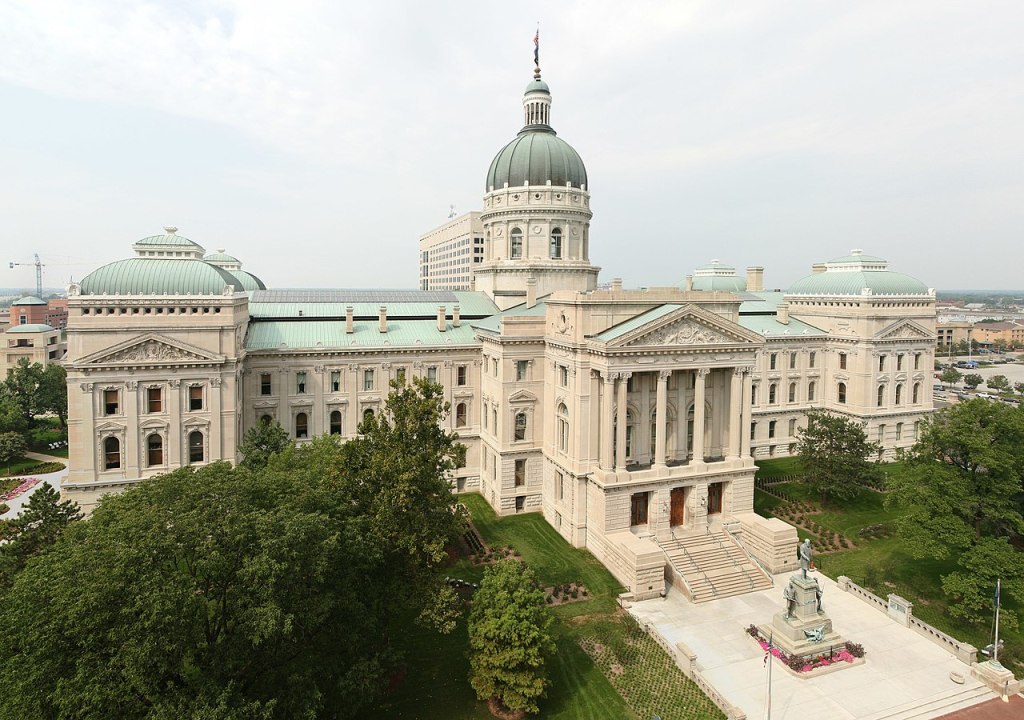
Indiana State House. Catarinell, Massimo. (2008, Sep. 28). Retrieved from https://commons.wikimedia.org/wiki/File:StateCapitolIndiana.jpg

It would be hard to write this and not talk about one of the most important issues this legislative session. If you think I’m talking about the budget, then you would be wrong. Governor Holcomb’s emergency powers have been hotly debated during session. House Bill 1123 was passed by the House and Senate then was subsequently vetoed by Governor Holcomb. The House has overruled the veto and the Senate will be taking up the issue again soon (Lange, 2021). House Bill 1123 allows state lawmakers call special sessions in lieu of the Governor (Lange, 2021). This will likely bring a constitutional challenge. The Indiana constitution gives the Governor the sole authority to call a special session (Shabazz, 2021). The House and Senate have claimed they have the authority to call a special session, but they have not cited that authority as of now (Shabazz, 2021). Governor Holcomb cited this constitutionality concern as the reason he vetoed the bill (Lange, 2021). I do not know whether the legislature has this power or not, but they are at the point of no return. They will be going to court and we will find out the outcome of this battle in due time. To say this has caused some tension between the Governor Holcomb’s office and the Republican legislature is an understatement. Senate Pro Tempore Rodric Bray and Speaker Todd Huston have to balance what their caucuses want, while at the same time trying to keep a good relationship with the Governor. I think they have done a fairly good job but overturning the veto may not send the best message.

Now, it is time to discuss what should be the most important issues during the budget year. The budget has passed out of both chambers and is now in conference committee. I think it would be an understatement to say there was a shock when the updated economic forecast came out. Some background may be needed here. There is an economic forecast that is published at the end of the year and that is what lawmakers use to craft the budget. There is a second one that comes out prior to the end of session and lawmakers can make the necessary changes to the budget based off the second forecast. This year the updated economic forecast provided lawmakers with $2 billion more to spend (Berman, 2021). This doesn’t include the $3 billion of federal COVID-19 relief that lawmakers are trying to figure out how to spend (Berman, 2021). The bottom line is that they are going to fund something. They could put some more money in K-12 education, fund some tax cuts, or pay down debt. We will see what happens in the next week. Dixon (2021) reported that the budget that the Senate passed out included: $110 million of pay off debts, $250 million for broadband, $150 million for education loss during COVID-19, and $100 million for Family and Social Services to addresses mental health in relation to COVID-19. The most controversial part of the budget is the increase in school vouchers (Dixon, 2021). The Senate did compromise and brought the final increase in voucher dollars down, but I assume that will be a point of contention in conference committee and may be where they spend a portion of their new found fortune.

There has been some of the typical Republican legislation that has been pushed through. There has also been at least one instance of some Republican legislation failing. There was a pro-life bill that has been passed that made some national news. The bill puts some new guardrails on abortion. Specifically it sets three new regulations: First, it requires Indiana doctors to tell women undergoing drug-induced abortions about a reversal option before giving them the drug; second, the bill bans chemical abortion over telemedicine; finally, the bill requires a notarization of a parent’s signature allowing abortion for women younger than 18 years old (AP, 2021a). I think this is smart legislation. If you are pro-life this is common sense legislation that will be upheld if it is challenged in court. Unlike the pro-life legislation, the Republicans were unable to get popular gun legislation passed. House Bill 1369 would have eliminated licenses to carry a handgun (B. Smith, 2021). The House passed the bill, and more than half of the Senate Republicans co-sponsored the bill (B. Smith, 2021). Assuming everyone that co-sponsored the bill voted for it they would only have to find less than 5 votes to pass this bill out of the Senate. They never had that option though, as the Senate decided to let the bill die and not bring it up during committee (B. Smith, 2021). There was a compromise through. Under the Senate’s budget proposal, you may still have to get the license, but there is no longer a fee (B. Smith, 2021). I would rather them pass the original bill, but getting rid of a fee is the next best step. I know Democrats like to say since there is sometimes a fee to get an ID you are making citizens pay for their right to vote. They like to ignore the fact that people have to pay to exercise their 2nd Amendment right to bear arms. So, getting rid of the fee was the smart move. Finally, in typical Republican fashion there had to be a bill concerning religion. There was a bill that was passed that prohibits any restrictions on religious services during a declared emergency (AP, 2021b). I think all three bills should have passed, but 2/3 isn’t bad. Well, it is bad when you consider the Republicans have supermajorities in both the House and Senate. Like I said, you have to get pushback from somewhere. It just so happens that this pushback is within their own caucus.

Now turning my attention to Indianapolis, a bill that concerned Indianapolis’ bus rapid transit died in the Senate. It came as a surprise when there was an amendment filed in a house bill that concerned IndyGo. Senator Aaron Freeman authored an amendment for House Bill 1191 that would require IndyGo to reimburse utility companies for relocations required during projects (May, 2021). It is no secret that Senator Freeman and IndyGo have had their share of differences over the past years. It is also no secret that IndyGo’s bus rapid transit system is not that good. I’ve rode the Redline multiple times and the busses aren’t reliable and the timing isn’t reliable. It is not what I would call rapid. It will be interesting to see what happens with this bill. I understand why Senator Freeman filed this amendment. As he put it, it is for “ratepayer protection” (May, 2021).  I agree with this amendment and hope the bill passes. IndyGo not paying for the relocation of utilities is just another way to buck the cost of these projects on ratepayers. In other Indianapolis news, Senate Bill 385 authored by Senator Jack Sandlin gives Indianapolis two extra years to establish a special taxing district for Indy Eleven’s new stadium (Burris et al., 2021). The original Indy Eleven stadium bill was also authored by Senator Sandlin and will be an important project for the city of Indianapolis in the coming years.

Then there are the rest of the bills that I fell like I have to mention. House Bill 1006, which is the police reform bill, was passed by both the House and Senate (Burris et al., 2021). With everything that happened last summer this was an important bill to make it through. Once again, Indiana is going to be a model state for this type of legislation. Governor Holcomb got one of his pet projects through, albeit a weaker version than he would have liked. The pregnant workers accommodations bill will allow pregnant employees to request accommodations and the bill requires the employer to respond in a reasonable time frame; the bill though does not mandate employers to grant the requests (C. Smith, 2021). This is not as far as the Governor wanted the bill to go, but it is a start. Surprisingly, a wetlands bill has been one of the most contentious this session. It eliminates a 2003 law that requires the Indiana Department of Environmental Management to issue permits in a state-regulated wetland and ends enforcement proceedings against landowners violating the current law (AP, 2021c). The bill has already passed both chambers and it is likely on its way to the Governor. Finally, Senate Bill 2, which was one of the first passed, fully funds schools who were virtual because of the COVID-19 pandemic (Lindsay, 2021).

Once the lawmakers leave, they won’t be leaving for good this year. It is a redistricting year. In the budget bill, the legislature extended the deadline for adjournment from April 29 until November 15 (WBIW, 2021). During this time, the legislature will get the census data and congressional and state legislature maps will be redrawn. This may be the end of session for now, but in my best Arnold Schwarzenegger impression, “we will be back.”

Sources

Associated Press. (2021, Apr. 6). Indiana Senate approves ‘abortion reversal’ requirement. Retrieved from https://apnews.com/article/legislature-medication-abortion-indianapolis-indiana-7f199c9901ba073c16e19113d75b95d7

Associated Press. (2021, Apr. 8). Indiana Legislature OKs religious activities as essential. Retrieved from https://fox59.com/news/indiana-legislature-oks-religious-activities-as-essential/

Associated Press. (2021, Apr. 15). Wetlands deregulation bill advances to Indiana governor. Retrieved from https://www.theindianalawyer.com/articles/wetlands-deregulation-bill-advances-to-indiana-governor

Berman, Eric. (2021, Apr. 15). SURPRISE! FORECAST ADDS $2B TO EXPECTED STATE REVENUE AS LEGISLATORS FINALIZE BUDGET. Retrieved from https://www.wibc.com/news/local-indiana/surprise-forecast-adds-2b-to-expected-state-revenue-as-legislators-finalize-budget/

Burris, Alexandria; DePompei, Elizabeth; Herron, Arika; Lange, Kaitlin; May, Ethan; Pak-Harvey, Amelia. (2021, Mar.22). Bills on Indy Eleven, police reform head to Holcomb’s desk. Retrieved from https://www.indystar.com/story/news/politics/2021/03/22/ indiana-general-assembly-summary-where-notable-bills-stand/4732538001/

Dixon, Taylor. (2021, Apr.13). Indiana state budget passes Senate. Retrieved from http://thestatehousefile.com/44931/indiana-state-budget-passes-senate/

Hakim-Shabazz, Abdul. (2021, Apr. 5). CONSTITUTIONAL CHALLENGE. Retrieved from https://indypolitics.org/constitutional-challenge/

Lange, Kaitlin. (2021, Apr. 15). Indiana House votes to override Gov. Eric Holcomb’s veto of emergency powers bill. Retrieved from https://www.indystar.com/story/news/ politics/2021/04/15/indiana-house-overrides-governors-veto-emergency-powers-bill/7186479002/

Lindsey, Jeanie. (2021, Mar. 16). Indiana General Assembly Approves Virtual School Funding Bill, Sends To Holcomb. Retrieved from https://indianapublicmedia.org /news/indiana-general-assembly-approves-virtual-school-funding-bill,-sends-to-holcomb.php

May, Ethan. (2021, Apr. 13). Statehouse fight over Indianapolis bus rapid transit is resurrected in a new way. Retrieved from https://www.indystar.com/story/news/ local/transportation/2021/04/13/indygo-bus-rapid-transit-once-again-threatened-indiana-statehouse/7207482002/

Smith, Brandon. (2021, Apr. 9). Eliminating Handgun Licenses Likely Not Happening This Session But Not Ruled Out. Retrieved from https://indianapublicmedia.org/news/ eliminating-handgun-licenses-likely-not-happening-this-session-but-not-ruled-out.php

Smith, Casey. (2021, Apr. 9). Indiana Senate OKs Bill Making Pregnant Worker Accommodations Optional. Retrieved from https://www.insurancejournal .com/news/midwest/2021/04/09/609133.htm

WBIW. (2021, Apr 13). Indiana lawmakers planning on return for redistricting votes. Retrieved from http://www.wbiw.com/2021/04/13/indiana-lawmakers-planning-on-return-for-redistricting-votes/

Jim Crow 2.0

According to President Biden, the new Georgia law signed by Brian Kemp is “Jim Crow on steroids.” (Sullivan & Vazquez, 2021). He even said it made “Jim Crow look like Jim Eagle.” (Solender, 2021) Your guess is as good as mine as to what that means. Jamelle Bouie, from The New York Times, wrote an opinion piece titled, If It’s Not Jim Crow, What Is It? (Bouie, 2021). What makes the Georgia election law so bad? I’ve seen people talking about it on social media, but I’ve read the portions of the law that they are upset about and have found nothing wrong with it. Maybe I just need some more background and then I’ll come around on thinking the law is a new version of Jim Crow.

Governor Brian Kemp signs Georgia election law. Photograph: Governor Brian Kemp’S Twitter Fe/Reuters

Jim Crow laws were established in the 1890s and continued until the Civil Right Act of 1964 was signed into law by President Lyndon B. Johnson. Jim Crow laws were targeted directly at Blacks in the South. The laws did things such as mandating segregation of schools, parks, libraries, drinking fountains, restrooms, buses, trains, and restaurants. “Whites Only” and “Colored” signs were constant reminders of the enforced racial order. Blacks were also systematically denied the right to vote in most of the South. Now, I do not know how this new Georgia election law compares to what happened during the Jim Crow era. I must have missed the part where it lays out different standards for Blacks and Whites. I must have definitely missed the part where is keeps Blacks for voting. Or maybe I missed the part where it says a Black vote courts less than a White vote. Wait, the law doesn’t have any of those provisions? I must be missing something here. Why did Georgia decide to write this law to begin with?

Everyone remembers how the 2020 election played out. Everyone remembers what happened in Georgia and the unfounded claims concerning voter fraud. Apparently, to those in the media and on social media, this law is a reaction to those unfounded claims of fraud in the 2020 election. That is what the timing may tell you, but it is not true at all. Sometimes it takes more critical thinking and investigative work to understand certain reasonings. In this situation all it took was a quick Google search. The Electoral Integrity Project (EIP) conducts studies surrounding election integrity in each state. (Garnett et al., 2016). In 2016, under EPIs study Georgia ranked 43rd in the United States in election integrity. (Garnett et al., 2016). EPI looks at things like electoral laws, electoral procedures, district boundaries, voter registration, party registration, media coverage, voting process, vote count, results, and electoral authorities. (Garnett et al., 2016). Contrary to popular belief, states want to be better than other states. It is not always a race to the bottom. There is a lot of competition between states. When it comes to one of the most important functions of government, states want to get it right. Also, it takes more than a year in most states to get an omnibus elections law through the legislative process. Over the past few years, I would wager there have been committees and boards that have discussed the issues and put together a proposal on how to better run Georgia’s election system. This law can also be in part a reaction to 2020. You can dismiss the fraud and still acknowledge that the election system in Georgia was flawed in 2020 as well as 2018. It wasn’t as much of a swing state in 2016, but obviously their system was flawed then as well. I will note that I did not find any mention that this law was designed to keep Blacks from voting. Maybe I just need to examine the bill again.

The New York Times released an article after this bill was passed in which they examined 16 different parts of the law; in reality it is just 16 complaints about the law. (Corasaniti & Epstein, 2021). This article has probably been one of the most shared articles on social media in the past week. I will first say, the headlines in the article give half-truths, because that is usually the only part people read. So, you have people on social media sharing one of the headlines and hundreds of people will think that is the whole story. In the subsections there is actual information that I can discuss. I won’t address all of the complaints because some of them are straight garbage. For example, the time to request an absentee ballot is decreased from six months to two months. (Corasaniti & Epstein, 2021). I don’t know who requests an absentee ballot six months in advance, but it is not necessary. I will address the issues that have been most prevalent in the media and on social media.

President Joe Biden at his press conference where at attacked Georgia’s new election law, Thursday, March 25, 2021, in Washington. (AP Photo/Evan Vucci) (Evan Vucci)

The major issue concerning the law is the “strict new ID requirements for absentee ballots.” (Corasaniti & Epstein, 2021). With no proof, the article states that “stringent voter-ID laws in other states have depressed voting mostly among people of color.” (Corasaniti & Epstein, 2021). There could be data to back this claim up, and if there is, I invite you to send me an article or a study. Though, the argument is always people of color cannot get IDs. If that is the argument you want to make, then go right ahead. If you think Republicans are creating voter ID laws to keep people of color from voting, then that is your prerogative. Of course, you will have to back that up with data showing people of color cannot get IDs and then we can find a way to fix those issues. Personally, I think this is asking the bare minimum. The right to vote is a privilege for being a citizen of the United States. To exercise that privilege there is nothing wrong with showing an ID. I’ll even bring the issue of the 2nd Amendment into the fold here. If people of color cannot get IDs and you require and ID to purchase a firearm, are people of color being denied their 2nd Amendment right to keep and bear arms? I don’t think that is a conversation that most people in the Democrat party are willing to have. Moving on though, I have a few assumptions of my own that I want to put out there. Senior citizens do not always have IDs and are sometimes easily confused. Also, Hispanics are people of color, and Hispanics are more and more fiscal and socially conservative. In just those two groups you have a giant voting block for Republicans that can be affected by this law. Based on the same assumptions it would appear if Republicans wanted more of their base to vote they would want to eliminate voter ID requirements. Maybe, Republicans are creating this law because they want secure elections. They want to confirm that those requesting and sending back ballots are who they say they are. I don’t understand how people can’t get IDs. Like in other states, Georgia will provide a free ID card to vote. If they don’t have an ID, they can put down their social security number. Call me naïve, but I must be missing something in all of this.

Another major complaint is “the G.O.P.-led legislature is empowered to suspend county election officials.” (Corasaniti & Epstein, 2021). This is what many people on social media refer to when they say the new law allows the state to toss out county election results. This is just not true. It puts the power to suspend and appoint new election superintendents in the hands of the election board. (Corasaniti & Epstein, 2021). The election board is composed of five members in Georgia: (1) the chair who is a non-partisan member elected by the General Assembly, (2) a member chosen by the House, (3) a member chosen by the Senate, (4) a member chosen by the Georgia Republicans, and (5) and member chosen by the Georgia Democrats. (Corasaniti & Epstein, 2021).  Decisions of the State Election Board usually must be unanimous. This means there is a high bar to remove the superintendents. To even consider removing an election superintendent there needs to be three clear violations of State Election Board rules or negligence in the administration of elections for two election cycles. (Corasaniti & Epstein, 2021). The State Election Board must have a unanimous decision removing the superintendent and also replacing the superintendent. Nowhere in this law does it give anyone the power to loss out election results. The law allows the state to step in when counties are running poor election system.

Apparently “drop boxes still exist … but barely.” (Corasaniti & Epstein, 2021). The new Georgia law allows drop boxes for each 100,000 voters in a county. (Corasaniti & Epstein, 2021). It would be good to note here that drop boxes were not a thing before this last election. Drop boxes are just mailboxes for ballots. (Rakich, 2020). If there are a few days left until the election and you don’t want to take a chance with your ballot getting in on time, then you can use a ballot drop box. (Rakich, 2020). This ensures that your ballot is in on time. This is really a non-issue. This can be a quick change under future legislation if the state feel drop boxes need to be expanded. There is also a logistical sense to all of this. These boxes have to be protected and ballots have to be collected every day. Not every county has to resources to do this. I think that the legislation should create a floor and not a ceiling. If a county has the resources to add more, they should be allowed to. I don’t think this will be an issue in the 2022 elections in Georgia. If it becomes a paramount issue, then I’ll eat my words here.

Finally, I have to talk about the food and water in line. I think this is an insane issue to be up in arms about. The one argument I see in the media and on social media surrounding this issue is that no one is decided who to vote for based on who brings them food and water in line. I hate to tell people this, but most people do not know who they are voting for in most elections when they get to the polls. If you have a county counsel candidate giving food/water out to voters, those voters are more likely to vote for that person. President, Governor, Senator, and Representative are not the only offices that you are voting for. Most of the elections are low information and little things can make a difference.

There were more complaints, but I will not go into the rest of them. If you have any other issues surround the law you wish I would have discussed, feel free to comment. I would love to have more discussions on this topic. But this bill isn’t anything like Jim Crow. It doesn’t target Black people and make it harder for them to vote. It doesn’t set different standards that Black people need to meet to vote. It sets a standard across the state. If bare minimum election standards are Jim Crow, then everything is Jim Crow.

Sources

Bouie, Jamelle. (2020, Apr 6). If It’s Not Jim Crow, What Is It? Retrieved from https://www.nytimes.com/2021/04/06/opinion/georgia-voting-law.html

Corasaniti, Nick; Epstein, Reid. (2021, Apr 2). What Georgia’s Voting Law Really Does. Retrieved from https://www.nytimes.com/2021/04/02/us/politics/georgia-voting-law-annotated.html

Garnett, Holly; et al. (2016, Dec 27). Electoral integrity in all 50 US states, ranked by experts. Retrieved from https://www.vox.com/thebigidea/2016/12/24/14074762/ electoral-integrity-states-gerrymandering-voter-id

Rakish, Nathaniel. (2020, Oct 5). More States Are Using Ballot Drop Boxes. Why Are They So Controversial? Retrieved from https://fivethirtyeight.com/features/more-states-are-using-ballot-drop-boxes-why-are-they-so-controversial/

Solender, Andrew. (2021, Mar 25). ‘Makes Jim Crow Look Like Jim Eagle’: Biden Slams ‘Despicable’ GOP Voting Restrictions. Retrieved from https://www.forbes.com/sites/ andrewsolender/2021/03/25/makes-jim-crow-look-like-jim-eagle-biden-slams-despicable-gop-voting-restrictions/?sh=765382242fa9

Sullivan, Kate; Vazquez, Maegan. (2021, Mar 26). Biden calls Georgia law ‘Jim Crow in the 21st Century’ and says Justice Department is ‘taking a look’. Retrieved from https://www.cnn.com/2021/03/26/ politics/joe-biden-georgia-voting-rights-bill/index.html

I Commit My Spirit

Before breathing his last, Jesus cried out “Father, into your hands I commit my spirit!” This is recorded in Luke 23. Again, this is Jesus quoting scripture. Here, he is quoting Psalm 31. In everything that Jesus did, he was fulfilling the word of God. Of course there is something else we can take from his last words. In his dying moments he is willingly giving up his spirit to God the Father. It may seem like he has no other choice is inevitable, but that can not be further from the truth. At any moment, Jesus could have used his divine nature and perform a miracle. In this moment, he shows absolute faith in God the Father. Jesus has the power to save himself, but he had absolute faith that his Father would not forsake him.

In the world today we like to rely on ourselves. We like to think no one else will be there to look out for us. We believe that we are alone in this world. Often times even when we are offered help, we would rather do things by ourselves. We are afraid to look like we cannot do something. We do not want to look weak in this cutthroat world. There are also times that the world seems to be out to get us. There are times in our lives when nothing seems to be going right and there is nowhere that we can turn to. What I am trying to say is this world seems to be lonely and dark at times.

We do not need to feel this way though. We can always turn to our Father in heaven. At his weakest, Jesus was able to turn to his Father and we should be able to heed that example. No matter how bad things were on the cross, no matter how hopeless things seemed Jesus was able to still turn to God the Father. In the same way, no matter how dark our lives may get we can always commit ourselves to the Father. After all, Jesus was being crucified on behalf of us. If the Father would not forsake the Son who was dying for us, we can have assurance that the Father would never forsake us.

As we finish out the Lenten season, we can learn a lot when we look to the cross. We need to listen to these last words of Jesus and apply them to our lives. We as Christians should try to live as Jesus died.

It Is Finished

While Christ Jesus was suffering on the cross he looked down at the Roman soldiers and said, “I thirst.” This is recorded in John 19. The Roman soldiers soaked a sponge in wine vinegar and put it to his lips. There are a few things we can take from these two short words. First, this is another time that Jesus is shown quoting scripture. Here, Jesus is alluding to Psalm 22. On the cross, Jesus does not leave us wondering who he is. He is the one that has come to fulfill the scriptures. Second, this reminds us of Jesus’ physical humanity. Jesus left behind his divine nature to take on human form. Thirst is a feeling we can identify with. Jesus was not just a divine being that did not feel pain. He physically suffered and died for us. Finally, this sets up the next thing Jesus says in John 19. He needed to drink to wet his lips and throat. After wetting his lips Jesus says, “It is finished.” This was the completion of the Old Testament prophecies. Although he still had things to take care of, the most important things were accomplished on the cross. Jesus’ perfect obedience to his father was completed. Most importantly, the power of sin, death, and the Devil was defeated.

As to the first of two things Jesus said, in our political world, we thirst for more news. We need to consume more information. We look to our media for our answers. We turn on CNN, MSNBC, and FOX to get our fix. We hate watch news that we do not like and get angry at clickbait from news outlets we do not agree with. We scroll through Twitter and Facebook looking for the best takes on current events. We are thirsting for information in this media drive world we live in, but in the end, we are just dehydrating ourselves.

The same way we are reminded by Jesus’ humanity on the cross, we should be reminded of our humanity. While we are focused on the insignificant events going on in the world, we should be focusing on our eternal lives. We know the things of this world do not matter, but we still focus all our time on those things. We will skip church because we would rather spend our mornings on our phones. We will skip bible study because we need to catch up on the news after work. We are thirsting for news while we should be thirsting for the word of God.

As to the second thing Jesus said, completing tasks is always the goal. In our government, elected officials want to solve problems. Elected officials want to solve climate change, fix the opioid pandemic, and bring down crime. They also want to complete tasks. They want to finish that road, build that school, and refurbish that park. In our personal lives, we want to complete what we must do. We want to get done with work so we can go home. We want to finish homework so we can do what we want to do. With this work, there will always be more to do the next day. Our work on earth is never complete, but we can have assurance that the work Jesus came to earth to do is finished.

When Jesus said, “It is finished,” he was not saying it was finished for just that day. He was not going to come back and do this again. His work was finished for all time. He paid our ransom in full. Our sins are forgiven. He defeated sin, death, and the Devil. We may have to worry about finishing the work we must do, but we can know that the most important work is finished.

As we are moving through Lent it is important to look to the cross for guidance. In just the few things Jesus says from the cross we can take so much from it. As we head into Holy Week, we need to turn our eyes to God and celebrate those events that happened 2000 years ago.

Why Have You Forsaken me?

Jesus cried out, “My God, my God, why have you forsaken me?” These worlds are found both in Matthew 27 and Mark 15. This is the only one of the final seven phrases that Jesus said on the cross which appears more than once throughout the Gospels. It is said that while Jesus was on dying on the cross he spoke the entirety of the book of Psalm. I will not delve into that belief; I will just focus on what was recorded in the Gospels. “My God, my God, why have you forsaken me?” is originally from Psalm 22. There have been many theologians that have tried to make sense of what Jesus is doing here or what the Gospel writers are doing by quoting this specific Psalm.  The first thought that comes to my mind is Jesus wanted those around him to take note and think of Psalm 22 and Psalm in its entirety. They would see that Jesus is the fulfillment of the prophecies that are found in the book of Psalm. I want to take it a little deeper though. In his moment of death Christ Jesus is taking on the sins of mankind. In this moment Christ Jesus is no longer perfect and in him is sin. In him is our sin. It makes sense here that he feels forsaken by the Father. God hates sin and in this moment Jesus is sin. It makes sense that in this specific moment that he feels separation from the other parts of the Trinity. This separation though is only temporary. Jesus takes on our sins and receives our punishment, which is death. In his death he defeats sin.

How can we apply this to our lives? How can we apply this in our political world? Sometimes it’s hard to take something you read from the Bible and try to figure out how to apply it in your own life. I think this is one of those times. But here goes nothing…

We are all sinful beings. We all have the old Adam inside of us. We are conceived in sin and we are born sinful. There is still hope for us. There is hope that through the washing and renewal that we receive in our baptism the old Adam in us has died and the new Adam is born. Even though we have this assurance, we still feel separated from God at times. When we sin, we don’t feel as connected to God as we should. We don’t feel like we deserve the forgiveness that God provides. We are in the same position Jesus was on the cross. We should know better though. Every Sunday we confess that Jesus came down from heaven and was made man. He was crucified for us and took on our sins. He too felt separated from God. He felt forsaken by his Father. Through this, he was still able to defeat sin, death, and the Devil. He took on our sins for us and took the punishment for us. He now sits at the right hand of the Father in glory. So, though we may feel separated from God, we should have hope knowing that in our baptism we were won by God. We don’t have to feel separated from God, because every Sunday we eat his body and drink his blood. We are sinful, but Christ Jesus has paid the price for our sins.

This is hard to apply in our political world. You can find other passages in the Bible that you can apply across the board, but these words by Jesus are focused on Christians in particular and that is how I will apply them. As a Christian in our political world today it is easy to feel lost. It is easy to feel like everyone you come in contact with is a godless person. While navigating in the political world, it may feel like God has forsaken us. We may feel separated from God when we are in a world that seems not to know God. We should take hope in the fact that God does not forsake us in any aspect of our lives. God first takes care of our spiritual body, but he also promises to take care of our earthly body. As long as we are using our vocation to serve him we should walk courageously knowing we are taken care of.

We may feel separated and forsaken by God in both our spiritual and physical lives at times. We should hold fast in the knowledge that Christ Jesus has joined us to God in his death. In Jesus’ death our sins are forgiven and we are made perfect in the sight of God. We should feel certain that God is with us in every aspect of our lives and we are protected.

Behold Your Son. Behold Your Mother.

With a new week of Lent comes a new analysis of one of the last words from the cross. “Woman, behold your son. Son Behold your mother.” These words come from Luke 19. Christ Jesus was suffering on the cross and he looked down to his mother, Mary, who was next to the apostle John and expressed his concern about her future. These words can guide us both in our political lives and our personal lives.

I think it was Toby Keith who infamously said, “I want to talk about me.” It is so easy to focus on yourself and not look outward and focus on others. There are things going on in your world and nothing else outside of that matter. Your needs and priorities should be the only things your focus on. You need to put yourself first because no one else will do it for you. Things that are happening next door only matter if they are affecting us. You matter and nothing else does.

In the political sphere, your own priorities matter. Policies that affect you are the only ones that matter. Your taxpayer money should only go towards things that benefit you. Politicians that you voted for should focus on you and not someone that did not vote for them.  Your vote should count more than others because you are more informed. You matter and nothing else does.

While dying, Jesus gave us more than enough examples of how we should act in our own lives. In pain, he looked down and made sure his mother would be well taken care of. He looked past what he was going through and made sure that those closest to him would have the security that they needed.

In your personal lives you should make sure those closest to you are okay. You should check in on friends and family. If someone close to you needs help you should offer them a hand. There may be a lot going on in your world, but the world is a lot bigger than yourself. Even past your immediate family, you should offer help to all those who need it. Volunteer your time to those less fortunate. When you see someone on the street offer them help. It does not have to be a big gesture, but a little goes a long way. I need to take my own advice here. With so much going on in my life it is easy to insulate myself from the outside world. I need to heed the example of Jesus and focus on those close to me and even take it a step further and focus on the wellbeing of those not close to me.

Moving to the political world, it is important to realize what you care about is not the only thing of importance. You may support common sense policies, but there is always another side to every issue. Representatives are elected to represent all people and not just those that voted for them. They should make decisions with the best interest of all people at heart. You should realize tax money is supposed to benefit the whole of society, and when the whole of society is benefited then you are benefited as well. You have just as much a say an everyone else and everyone’s voice should be heard. I need to take this advice as well. I like to think I know what is best for a lot of people when it comes to policies and I need to realize that is not true. I know what is best for myself, and someone else knows what is important for them. I need to listen to what is important to them and help push their priorities with my own.

We need to follow in Christ Jesus’ example. Even in his death he was able to focus on others. We need to be able to put own needs aside and focus on others in our lives.