Paradise

As we are moving through the season of Lent it is time to discuss and apply another one of Jesus’ last words while dying on the cross. In Luke chapter 23 it is documented that our Lord turned to one of the prisoners who were being crucified next to him and said “Truly, I say to you, today you will be with me in paradise.”

While suffering and dying during his crucifixion, the thief that was being put to death next to Jesus was repentant of his actions on earth. Even though the thief knew that his mortal fate sealed, he was willing to look beyond that moment and realize that Jesus was more than a man. In comparison, the man who was being crucified on the other side was mocking Jesus. He knew his mortal life was going to end, but he was not willing to look beyond what was happening in the moment. The thief knew that his mortal life was ending, but his new life was just about to begin. He was asking Jesus to give him forgiveness and allow him the gift of eternal life.

In the political world today, it is so easy to only care about the here and now. Politicians only care about doing what will get them reelected for their next term. They care about what makes them look good in the moment. office. They will do whatever is necessary in the moment to hold onto the power that they have. They will refuse to do what is right in the long-term and instead do what benefits them in the short-term. They see everything as a transaction. They will refuse to help those that will not help them. If they do not get something now, they see no need in helping later. They ignore the future and instead focus on now.

The voting public is like this as well. Voters look to the government to give us things now. They want the stimulus money but fail to realize that their children and grandchildren will have to pay that money back. They want the government to force businesses to pay them more money but fail to realize that that will come with a rise in prices. They want to protect the climate but fail to understand how renewable energies are made. There is not need to worry about the future though, because these things are needed now. Voters focus on the here and now and fail to look beyond what is in front of them.

This world is the man that mocked Jesus while on the cross. He knew the claims being made about Jesus. He knew why Jesus was being put to death. If Jesus really were God’s son, why couldn’t he save their mortal lives? The man refused to look beyond that moment. He was focusing on his death, while he should have been focusing on his life. The world needs to be more like the repentant thief. He realized that it was not the end for him. He realized there was life after death. He knew the claims about Jesus as well. He knew in that moment that Jesus was the one that would grant him eternal life. He was ignoring his death and focusing on his life.

Time does not end right now. Things will continue to happen and what we do now will affect what happens in the future. That is true even until death. The political world needs to get away from our tunnel vision.

Politicians need to focus on doing good for everyone that they represent. They need to be content with where they are and focus on the job they have. They need to make decisions that will best affect those in the future. There will be a future and they will be remembered in it. Voters also need to think about the future. They should want the government to do better, while also not wanting to it to be irresponsible. They should realize what they want the government to do now will affect the next generation the most. You need to ask yourself in you will be the man that focuses on your death or are you the man that focuses on the rest of your life? If you focus on the future instead on the now, maybe the future will be paradise.

Forgive Them

As we head into the Lenten season, I wanted to do something different with the blog. I am not one for giving something up for Lent, but I always try to turn my focus to God during this season. With that in mind, I wanted to spend the next 6 weeks of Lent and Holy Week writing blog posts that will help in this effort. Each week I will write about one of the Seven Last Words from the Cross. I will try to explain how we can apply those words to the political discourse of today.

The first recorded words that Christ Jesus muttered on the cross were, “Father, forgive them, for they know not what they do.” This phrase comes from the 24th chapter of the Gospel of Luke. At his lowest point, Jesus appealed to his Father, our God in heaven, for the forgiveness of those who were crucifying him. Jesus was not thinking of himself when he was suffering and dying on the cross. He was giving forgiveness to those who did not deserve it. That is what our Savor did, and that is what we are called to do.

In our politics, it is so easy to vilify those who do not hold the same beliefs as us. There are so many sides that are waring in our political world today. You have Republicans vs. Democrats, right vs. left, pro-life vs. pro-choice. We sit behind a screen and virtually shout at the people we don’t agree with. Where there is a protest there is always a counter-protest. These people may have not done anything to each other personally, but they reject each other for the fact that they don’t believe the same thing. Politics today is about having enemies everywhere.

This is also a world where ‘Cancel Culture’ is prevalent. This is not one-sided. Everyone tries to cancel everyone on the other side. In politics, people are more likely to ruin someone’s career and take away their livelihood than they are to forgive them.

I will admit that I am of this world. It is hard for me to get along with those that have views different than mine. I would rather speak than listen. I would rather vilify than commend. I would rather look for the bad in people instead of the good. I would rather reject those that hurt me than forgive them. I fall short of the example my Savior set for me on the cross some 2,000 years ago. I refuse to forgive or even begin to accept those that I consider enemies.

If we want to grow as a people and as a nation we need to heed the example that our Lord set on the cross. If he was willing to forgive those who were crucifying him then we should be able to forgive those who we believe have hurt us. There are going to be people that use words to crucify us for what we believe in. We should be able to forgive those people.  There are going to people people that believe things that we feel are immoral. We should be able to understand them and learn from them. We should be able to forgive people instead of canceling them. We should be able to forgive those that try to cancel us. Even if we fall short, which we will, we can simply tolerate and understand those on the other side. It is all about putting your best foot forward. It is about being the person Jesus was while he was suffering on the cross.

We have the greatest example of forgiveness. In a sense, on the cross, Jesus was forgiving us. He was there taking on our sins. He was dying for us and in his death, came our forgiveness. As we move through this season of Lent, I will try to change the way I interact with those that don’t agree with me. I will try to forgive those who would hate me. I hope everyone can also learn forgiveness from the example that Christ Jesus set for us on the cross. If we just do this, we would have a much healthier political discourse.

Federalism: Our System of Government

The past year helped to show the role of federalism in our country. First, the Coronavirus pandemic displayed how federal and state governments can work together towards a common goal. Then, civil unrest showed how the federal government can use their immense power to commandeer states when they fall out of line. In both instances, there are those that believe the federal government should act with swift and decisive authority, while others believe that the federal government should take a hands-off approach and let states make their own decisions. The answer to what would be best lies in the idea of federalism.

Federalism, in its simplest form, is the relationship between the federal and state governments. There are three different types of governments where federalism is at play: confederal government, national government, and federal government. Confederal government is a decentralized government with separate, autonomous, independent states. There is strong state sovereignty with a weak central government in this governmental system. National government is a centralized government with controlled, dependent states. There is a strong central government and weak states in this governmental system. Federal government is a mix between confederal and national government. In a federal government, there are separate autonomous, independent states that are subject to national supremacy. This federal system is a theoretical system, as it has never been perfectly implemented. The United States lies in between a federal and a national government in our form of federalism.

The framers of the constitution saw the problems that would arise from confederal or national government. There would be majority/minority factions (parties) at either the state or national level depending on the form of government. The framers saw factions as the biggest threat to popular government. There were two ways to deal with factions: remove its causes or control the effects. There were two ways to remove its causes: give everyone the same property or remove liberty. Giving everyone the same property would allow them to have the same interests. This would be a form of communism/socialism, which was not yet a thing, but the framers saw as impossible. They could also remove liberty, but considering they just fought a war to gain liberty this was out of consideration. The other option was to control the effects of factions. The first way is to just prevent the formation of a majority interest, which was not possible because it would remove liberty. The framers settled on the idea of rendering a majority unable to execute its will. They did this by creating an extended republic. They extended the republic in two ways: dividing power between levels of government and dividing powers between branches of government. I will go into dividing powers between the branches of government when I write about separation of powers and checks and balances. What is important is the two separations together are Madison’s dual protections against tyranny. This separation of powers between levels of government, which James Madison described in Federalist No. 10, is where we get the idea of federalism.

The constitution, in its original form, wants strong states with a weak, but solid, federal government. The framers wanted to be closer to a federal government and further from a national government. For the first 150 years of the United States existence, this was the case. The state governments yielded a large amount of power and the federal government was there when needed. Today, the opposite is true. The federal government daily exerts power over states. The United States is now closer to a national government than we are a federal government. This balance has been brought to attention when it comes to the Coronavirus and civil unrest responses. Before we dive into what is better dynamic, it would first be beneficial to examine how we got here.

The powers of both the federal and state governments can be found in the Constitution. The Commerce Clause has allowed a shift in power from the states to the federal government. The Commerce Clause allows the federal government to regulate commerce with foreign nations and other states. The Commerce Clause used to be interpreted broadly by the Supreme Court. In 1890, Congress passed the Sherman Anti-Trust Act. This was passed using the pretext of the Commerce Clause and was aimed at breaking up and stopping monopolies. The Supreme Court case US v EC Knight (1895) related to a sugar manufacturer and whether it was a monopoly. The Court ruled in favor of EC Knight, finding that although the act was constitutional, manufacturing is not considered interstate but intrastate commerce. This decision set up the Direct/Indirect test for the Commerce Clause. If there is a direct effect on interstate commerce then Congress can regulate the activity, but if there is an indirect effect then Congress cannot regulate the activity.

In 1905, another case was brought to the Supreme Court. Swift & Co v US (1905) related to a beef monopoly. The Court ruled in this case that anything in the “stream of commerce” is commerce when there is a direct effect on interstate commerce. In the decision, the Court found that the stream of commerce included inception, production, distribution, and sale. This seems to be a broad interpretation of the Commerce Clause which is not in line with the decision from the US v EC Knight (1895) decision.

Four other cases in the next thirty-two years concerning the Commerce Clause ruled in line with the US v EC Knight (1895) decision: Hammer v Dagenhart (1918), Schecter Poultry Corp v US (1935), US v Butler (1936), and Carter v Carter Coal Corp (1937). Hammer v Dagenhart (1918) concerned a law that prohibited child labor. The Court ruled that production is not commerce and that this would be an indirect effect on interstate commerce. Schecter Poultry Corp v US (1935) was a lawsuit that was brought when Congress delegated unlimited authority to the President to regulate industries in the National Industrial Recovery Act. The Court ruled that it violated the separation of powers, because it transferred legislative authority to the executive. US v Buter (1936) concerned the Agricultural Adjustment Act. There was a tax levied on farmers to provide subsidies to other struggling farmers. The Court ruled this unconstitutional in that taxes and spending must be done for the general welfare, not for specific persons or groups. Carter v Carter Coal Corp (1937) concerned minimum wages, maximum hours, and fair practices in the coal industry. The Court found these regulations unconstitutional as production is not commerce. These cases all had a narrow Commerce Clause interpretation in line with US v EC Knight (1895). After this case, the Court had ruled that the federal government cannot control manufacturing, labor, agricultural taxes, wages, or hours.

In 1937, these precedents were overturned in National Labor Relations Board (NLRB) v Jones & Laughlin Steel Corp (1937). The NLRB, under the Wagner Act determined that labor disputes had a direct effect on interstate commerce and can be regulated by Congress. The Court ruled in favor of the NLRB which allowed congress to legislate labor practices. Wickard v Filburn (1942) dealt with a farmer that harvested above his allotment permitted by the Agricultural Adjustment Act. Filburn used his excess harvest for personal use only. The Court ruled that he could not do this, because no matter how small an activity it still has an aggregate effect on interstate commerce. These two cases allowed Congress to control manufacturing, labor, agriculture, wages, and hours. These two cases were a huge blow to states powers and a swing towards a national government. This expanded all the way to civil rights when the Court ruled in Heart of Atlanta Motel v US (1964). The motel discriminated against African Americans and would not provide them service. This was in defiance of Title II of the 1964 Civil Rights Act. The Court ruled that hotels and restaurants provide accommodations and they serve out-of-state guests. This would rise to the level of interstate commerce according to the Court.

These cases were decided with a broad view of the Commerce Clause. It took power from the states and gave it to Congress. Recently, there have been two cases that have put limits on what Congress can do in relation to the Commerce Clause: US v Lopez (1995) and US v Morrison (2000). The case NFIB v Sebelius (2012) was the first case to take commerce power away from Congress. US v Lopez (1995) was about the Gun Free Zone Act. Lopez brought a gun to school and was arrested. The Act was passed based on the Commerce Clause. The Court ruled that guns were not commerce. Commerce is a channel of commerce, an instrumentality of commerce, or an activity that has a substantial effect on interstate commerce. The act was passed by piling inferences on inferences and the Court found that it would lead to an unlimited federal government. US v Morrison (2000) was about the Violence Against Women Act. The Act authorized a civil penalty for gender-motivated violence. The Act was again passed based on the Commerce Clause. The Court found that the victim is entitled to a civil penalty through state law and not federal law, because crime is not commerce. NFIB v Sebelius (2012) was the Affordable Care Act (ACA) court case. The ACA had two main parts: the individual mandate and Medicaid expansion. The Court ruled that the individual mandate was constitutional under the Taxing and Spending Clause. The Court ruled that the Medicaid expansion was unconstitutional, since if a state did not enact the expansion, they would be cut off from all Medicaid funds and this is considered fiscal coercion. The Court in this case ruled that insurance is commerce, but Congress cannot regulate it because they are regulating future activity and not current activity. This was the first case since 1937 to take power away from Congress in relation to the Commerce Clause.

The cases so far have shown us what the federal government can and cannot do in relation to the Commerce Clause. There have been two cases that have shown us what the federal government can make or not make states do: New York v US (1992) and Printz v US (1997). New York v US (1992) was brought up in relation to the Low-Level Radioactive Waste Management Act. The Act stated that states that have deposit sites must accept waste from states that did not have deposit sites, and it could be under monetary provisions, access initiatives, or take title and liability. The Court ruled that the third of these violated the 10th Amendment of the Constitution, because it forced state governments to serve the federal government. The Court believed that it would destroy the distinction between federal and state governments. Printz v US (1997) was a lawsuit concerning the Brady Bill. The Bill introduced background checks for guns, but it did not have an implementation plan. The federal government shifted the implementation to the states. The Court ruled that this was unconstitutional, in that Congress cannot compel states to enact federal programs. They Court believed, again, that this would turn states into agents of the federal government.

The first cases that were explained helped to show what the federal government and Congress can do under the Commerce Clause. The later cases show what the federal government and Congress cannot do under the Commerce Clause. They also show what the federal government can make states do and not do. We can see through more recent cases that states prevent an overbearing federal government in our system of federalism. The sovereignty that states have are the backstop against a domineering federal government.

The federal government has immense power, but state governments can make laws as well. Under federal preemption, federal laws take precedence over state law. There are three types of federal preemption: express preemption, occupy the field, and conflict or frustration. Express preemption is when federal law expressly states that states cannot regulate in an area. Occupy the field is when federal law is comprehensive and therefore presumes preemption. Conflict of frustration is when state law conflicts with federal law or frustrates its purpose. Assuming the federal governments law is constitutional, state governments cannot make any laws that would fit any of those three distinctions. In relation to the commerce clause, states can regulate commerce as well. States can regulate commerce under the condition that there is no discrimination of interstate commerce and the burden on commerce is outweighed by the states interest.

The interplay between federal and state governments should be weighed using the Constitution and all available court precedence. In relation to Coronavirus, I believe the Trump administration addressed the long past of taking away state’s powers during crisis. The federal government gave decision power to states, while at the same time providing support while necessary. President Trump understood the importance of states’ rights and steering away from an overbearing federal government. Far too often, when crisis strikes, the federal government will take power for themselves. The opposite finally happened when it comes to Coronavirus. President Trumps Attorney General, William, Barr, was even active at curbing overbearing states with it come to stay-at-home orders. I believe this is the interplay that the framers intended when they implemented our federalist system of government.

Civil unrest should be taken differently. Do I think that the President should have sent in active military to quell protests? No. Should the President be afforded that option if states are unwilling to put a stop to violent civil unrest? Yes. I think President Trump, as with Coronavirus, understood states’ rights. I think the President was more aggressive with civil unrest than with Coronavirus for the fact that people in these situations are in imminent danger. It was well within his purview to put an end to violent civil unrest and it is backed up by historical precedence.

When it comes to the Supreme Court, I think in the past thirty-years under Rehnquist and Roberts the idea curbing federal overreach is a priority. I think both have understood past decisions regarding the Commerce Clause were overbroad and they needed to be interpreted more narrowly. These two Chief Justices believe in original intent and that the Constitution says what it means. The Constitution should not be taken so broadly as to not expand governments reach.

The Supreme Court and the past administration have worked to move us closer to a federalist system and further from a national system of government. This is a pendulum swing that is much needed. In response to Coronavirus, the Trump administration did the right thing. In response to civil unrest, I also believe the Trump administration did the right thing. The original intent of federalism was portrayed in these instances. You have a federal government that provided support for states while keeping a hands-off approach. In the same administration, you had federal government that is willing to exert power to protect law-abiding citizens. We, as Americans, should all be grateful when instead of taking power our leaders gave it back.

Billionaires Should Exist

There seems to be a majority on the left that believe there should not be billionaires in the world. These same people believe the economy that America has built does not work for many Americans. I see Facebook and Twitter posts all the time in relation to these subjects. There are three major themes I see within these posts: billionaires hording wealth and the income inequality that it leads to, billionaires sitting in their offices while their employees fail to make living wages, and the economy that the United States has built does not benefit the middle class. These seem to be very valid reasons as to why we should not have billionaires and that the economy is not working, that is, until you peel back the curtain. I want to spend time explaining how billionaires help the economy instead of hindering it and that the economy that we have built is working, and that will include pushing back against the arguments listed. At the end of this post, I hope to have provided significant evidence as to why billionaires should exist and how the economy that we have built is strong.

There are those that believe a billionaire being worth $1 billion means that there is $1 billion other individuals cannot have. In reality, that is wealth in the economy that was created by the idea that a certain company came up with. It is not about getting a bigger piece of the pie but expanding that pie. This happens by gross domestic product (GDP) growth. GDP is the total worth of an economy. I want to start from 1940 and look at the United States GDP every 20 years. In 1940, the United States’ GDP was $.1 trillion or what would be valued at $1.33 trillion today. In 1960, the United States’ GDP was $.54 trillion or what would be valued at $3.26 trillion today. In 1980, the United States’ GDP was $2.86 trillion or what would be valued at $6.76 trillion today. In 2000, the United States’ GDP was $10.25 trillion or what would be valued today at $13.13 trillion (Andjelic, 2019). Finally, in 2020, the United States GDP is valued at $21.44 trillion (Silver, 2020). This bigger pie can be attributed to the billion-dollar ideas that have popped up in the past 30 years. In 1990, there were 99 billionaires in the United States (Statista, 2012). In 2020, the number of billionaires in the United States has increased to 614 (Coudriet, 2020). These are individuals that have grown the pie in the United States to what it is today. These are not people that are hording wealth, they are creating it.

What about the expanding inequality that having all these billionaires creates? There are two types of monetary inequality: income inequality and wealth inequality. Starting with income, since 1980, the bottom 50% of America’s share of income has dropped from 20% to around 13% (Goldstein, 2017). This must mean the richer are getting richer and the poorer are getting poorer. Well, in 1980 the bottom 50% had a 20% share of $2.86 trillion which equates to $.57 billion or what would be valued at $1.35 trillion today. Today, the bottom 50% have a 13% share of $21.44 trillion which equates to $2.79 trillion. In real dollars that is a 500% increase or even adjusted that is still a 150% increase in the share of income for the bottom 50% of Americans.

When we get to wealth inequality, there is a stronger argument. The bottom 50% of Americans have negative wealth (Warren, 2019). Having negative wealth is not a bad thing. If I take out a loan to buy a $200,000 house and take out a $15,000 loan for a car, I will have negative wealth because of the debt I have accumulated. That does not mean I cannot afford all these payments and live my ideal life. There is a huge percent of those in the bottom 50% of Americans that would fit into this group of individuals. That accounts for much of the debt the bottom 50% on Americans have. The other huge factor when it comes to debt for the bottom 50% of Americans is college debt. This is where statistics surrounding wealth inequality get sketchy. Most, if not all, college students and recent graduates fit within this bottom 50% of Americans. They have not had the opportunity to make the salaries that those individuals 40 years ago could only dream of.

This takes me into the next points that I will make. There are business owners and executives that can make millions and even billions, while their employees get paid much less. Walmart and Amazon are two prime examples that are used to push this point. I will get to those two businesses, but I want to start with Microsoft and Facebook. College students that are racking up debt will have jobs waiting for them when they get out. I will use employees of Microsoft and Facebook to show this, while at the same time showing how valuable the idea the founder of each company had was worth. Facebook employed around 45,000 individuals in 2019 and they grew their workforce by about 30% a year in the past 5 years (Macrotrends, 2020). Those 45,000 individuals made a median income of $240,000 a year (Romburgh, 2019). If Facebook continues to grow their workforce at a rate of 30% a year that is 13,500 individuals that will be hired next year. Not all of those will be recent graduates of course, but for arguments sake let us say half are recent graduates, which come out to 6,750 individuals. Those are 6,750 individuals that had debt and were probably in the bottom 50% of Americans. They are now vaulted into the top half of Americans in terms of income and will be able to quickly pay off college debt. Microsoft employed around 144,000 individuals in 2019 and grew their workforce between 5-10% in the past 5 years (Macrotrends, 2020). Those 144,000 individuals made a median income of around $170,000 a year (Lerman, 2018). Like with Facebook, let us say Microsoft grows it workforce by 10% next year, which would be 14,000 employees. If half of those are recent graduates, that is 7,000 individuals who were most likely in the bottom 50% of Americans and most likely had college debt. Those individuals will now be in the top 50% of income earners and be able to pay off their accumulated debt. These are jobs that just were not there 30-40 years ago. Therefore, the value of a college education has risen in recent years. I am not arguing that the price of college is not too high, but the value of a college education has outpaced inflation. This is also a nice snapshot to see just how valuable the ideas that Mark Zuckerberg and Bill Gates had when they started Facebook and Microsoft. They built giant corporations that employ hundreds of thousands directly and employ millions indirectly. These were just two of the many examples. I could have listed other tech giants such as Apple, Netflix, Hulu, Verizon. Then you have all the law firms and pharmaceutical companies where starting wages have continued to rise.

I do want to touch on the cost of college in all of this (There will be a full blog post pertaining to the cost of college in the future). The cost of college has risen drastically in recent years. I spent a lot of money and took out loans to attend college. I believe the money was well spent and I see it as an investment. There are other options besides a 4-year university. I think our culture needs to stop pushing a four-year college on every high school student. High schools need to have comprehensive counseling that provides options for students. This will make students realize they have options other than a local retail store or college. There are community colleges where you can get associates or bachelor’s degrees for a reasonable amount of money. These are investments that are worth their weight in gold. You can reap the benefit of a degree without spending an exuberant amount of money. There are also trade schools which are great investments for many Americans. This is deviating from the main post, but I felt obligated to address the issue.

Now, let us examine two places where you do not need any post-secondary education to work at, Walmart and Amazon. Unlike Facebook and Microsoft, where you need a college degree no matter if you are an entry employee or an executive, at Walmart and Amazon most workers have a maximum of a high school diploma. Walmart employs around 1.5 million individuals in America (Bose, 2018). The average full-time (34 hours a week) hourly employee at Walmart, which accounts for most jobs at Walmart and does not require a college degree, makes $25,000 a year (Youn, 2019). Those numbers do not include distribution centers which would increase that number. Amazon employs around 750,000 individuals (Zetlin, 2019). The median pay at Amazon is around $35,000, but this includes part-time and seasonal workers (Romano, 2019). I could walk into Walmart or Amazon now and get a job and make enough in my hometown to afford what I need. I can work hard and eventually I will make more than that $25,000 and at that time I will be able to buy a car. I can work even harder and become a supervisor or manager and be able to afford a mortgage. I can build a good life for myself without going into college debt. The job may not be great, but you can make the most of it. The employers may also offer programs that will help pay for schooling if that is something the employees are interested in. These are low-skilled jobs that can lead to other great opportunities within the company. There will also be individuals who are content with the $25,000 they will make a year. The Walton’s and Jeff Bezos built companies that relied on low-skill workers. These companies make the lives of every American easier. The billions that they are worth are well earned. I would argue the service that they provide to America and the world are worth more than their current net worth. Both companies have been working to raise the wages of their employees in recent years without government forcing them to. Walmart and Amazon are good for America. They provide jobs that are needed for Americans that are not suited for college or a trade. I can also use other examples like Target or Lowes. That does not include other retail/clothing stores, car manufactures, and factories. These jobs help provide livelihood for many of those in the bottom 50%. These jobs work for certain people and as we grow and create other sectors people can begin to move out of these jobs and into better paying and higher skilled labor. I would like to add that there are many jobs within these sectors that do not require a college education and will still allow you to work your way into the upper class.

There are many people that think the economy that we have built does not benefit the middle class. The top 1% or 10% keep gaining wealth while the middle class suffers. While it is true that real median household income has not risen since 2000, it should be noted that the 15 years prior we saw unprecedented growth. From 1985-2000, America saw real median household income increase from $51,000 to $61,000 ($23,000 to $41,000 not adjusted) (Fred, 2019). As of 2018 that number has only risen to $63,000. Between those 18 years, the world saw the biggest economic downturn since the Great Depression. The economy is finally stable and looks as if when Covid-19 passes the economy can be taken to new heights. Why though does the middle class keep shrinking? Well, that is because more people are graduating out of the middle class and into the upper class. The number of households making less than $50,000 has been shrinking and it is at an all-time low, whereas the number of households making more than $100,000 is at an all-time high. You do have a trade-off, but so many more people are moving from the middle class to the upper class than those moving from the lower class to the middle class that the middle class is still shrinking.

The evidence that I have laid out provides us with a few conclusions. First, billionaires help grow the economy and do not hinder it. Second, business owners deserve the fruits of their labors as what they created provides more benefits than we can comprehend. Third, the economy that we have built is working for the American middle class. No matter what those on the left try to post on social media to attack the right on the basis of the economy, facts will always win the day.

Sources

Andjelic, J. (2019, Jul 15) Fortunly’s Annotated Guide to a Century of US GDP by Year. Retrieved from https://fortunly.com/statistics/us-gdp-by-year-guide/#gref

Bose, Nandita. (2018, May 25). Half of Walmart’s workforce are part-time workers: labor group. Retrieved from https://www.reuters.com/article/us-walmart-workers/half-of-walmarts-workforce-are-part-time-workers-labor-group-idUSKCN1IQ295

Coudriet, Carter. (2020, Mar 18). The States with the Most Billionaires. Retrieved from  https://www.forbes.com/sites/cartercoudriet/2020/04/09/the-states-with-the-most-billionaires-2020/#38dd09c3392a

Follett, Chelsea. (2019, Sep 18). Middle Class Shrinking… As Households Become Richer. Retrieved from https://www.cato.org/blog/middle-class-shrinking-households-become-richer

FRED. (n.d.). U.S. Census Bureau, Median Household Income in the United States. Retrieved from https://fred.stlouisfed.org/series/MEHOINUSA646N

FRED. (n.d.). U.S. Census Bureau, Real Median Household Income in the United States. Retrieved from https://fred.stlouisfed.org/series/MEHOINUSA672N

Goldstein, Steve. (2017, Feb 7). Income share for the bottom 50% of Americans is ‘collapsing,’ new Piketty research finds. Retrieved from https://www.marketwatch.com/story/income-share-of-bottom-50-is-collapsing-finds-researchers-including-piketty-2017-02-07

Lerman, Rachel. (2018, Oct 16). Microsoft CEO Satya Nadella makes 154 times median employee pay. Retrieved from https://www.seattletimes.com/business/microsoft/microsoft-ceo-satya-nadella-makes-154-times-median-employee-pay/

Macrotrends. (n.d.). Facebook: Number of Employees 2009-2020. Retrieved from https://www.macrotrends.net/stocks/charts/FB/facebook/number-of-employees

Macrotrends. (n.d.). Microsoft: Number of Employees 2006-2020. Retrieved from https://www.macrotrends.net/stocks/charts/MSFT/microsoft/number-of-employees

Romano, Benjamin. (2019, Apr 12). Amazon reveals what typical U.S. worker makes after its minimum-wage bump. Retrieved from https://phys.org/news/2019-04-amazon-reveals-typical-worker-minimum-wage.html

Romburgh, Marlize. (2019, Feb 15). The typical Facebook employee earns double Silicon Valley’s median household income. How 50+ big tech employers compare. Retrieved from https://www.bizjournals.com/sanjose/news/2019/02/15/median-pay-facebook-silicon-valley-aapl-goog-nflx.html

Statista Research Department. (2012, Mar 7). Number of billionaires in the United States from 1987 to 2012. https://www.statista.com/statistics/220093/number-of-billionaires-in-the-united-states/

Silver, Caleb. (2020, Mar 18). The Top 20 Economies in the World. Retrieved from https://www.investopedia.com/insights/worlds-top-economies/

Warren, Katie. (2019, May 23). One brutal sentence captures what a disaster money in America has become. Retrieved from https://www.businessinsider.com/bottom-half-of-americans-negative-net-worth-2019-5

Youn, Soo. (2019, May 9). Walmart reveals salaries — and they may not be what you think. Retrieved from https://abcnews.go.com/Business/walmart-reveals-salaries/story?id=62932622

Zetlin, Minda. (2019, Oct 31). Amazon Now Has 750,000 Employees After Third Quarter Hiring Binge. Retrieved from https://www.inc.com/minda-zetlin/amazon-750000-employees-hiring.html

The First 100 Days

Joe Biden took his oath of office and is now officially President Biden. It was a few hours later that he was in the Oval Office signing his first executive orders. In fact, President Biden signed 17 executive orders yesterday. That seems like a lot of unilateral partisan decision making for someone that ran on bringing bipartisanship back to Washington. These executive orders are just scratching the surface for what President Biden wants to accomplish in his first 100 days in office. Let’s just take a look at those first 17 executive orders and look ahead to what’s to come in President Biden’s first 100 days in office.

WASHINGTON, DC – JANUARY 20: U.S. President Joe Biden delivers his inaugural address on the West Front of the U.S. Capitol on January 20, 2021 in Washington, DC. During today’s inauguration ceremony Joe Biden becomes the 46th president of the United States. (Photo by Rob Carr/Getty Images)

Again, there were 17 executive orders signed yesterday and they include actions that: impose a 100 day mask mandate on federal property, restructure the federal governments coordination to the COVID-19 pandemic, rejoin the World Health Organization (WHO), extend eviction and foreclosure moratoriums, extend the pause of student loan payments and interest, rejoin the Paris Climate Agreement, end the Keystone XL pipeline and revoke oil and gas development on federal land, advance racial equity through the federal government, count non-citizens in U.S. Census, strengthen workplace discrimination protections based on sexual orientation and gender identity, defend the “Dreamers” program for undocumented Americans, end President Trump’s travel ban, change arrest priorities for Immigration and Customs Enforcement (ICE), stop border wall construction, keep protections for a group of immigrant Liberians in the country, freeze Trump administration regulatory actions, and formulate an Executive Branch ethics doctrine (Erickson 2021).

I thought a President Biden would want to forge his own path going into inauguration day. I was wrong. Based on the executive orders signed yesterday we are headed towards a third term for President Obama. On climate, President Biden will rejoin the same agreement that we joined under President Obama. The Pairs Climate Agreement is aimed at reducing carbon emissions worldwide. This agreement, as it stands, will kill our energy industry with no real alternative. The Biden administration is still rejoining even after we know countries that have tried to eliminate carbon emissions can’t even reach their goals (Plumer & Popovich 2018). Worse than that, we are tying our own hands while the rest of the world stands by and watches China grow exponentially. There has been no real push for renewable energies in quantity of quality, but President Biden still comes out of the gate and kills the Keystone XL pipeline. This alone kills 11,000 jobs that the pipeline would have sustained in 2021 (Conklin 2021). The fact that we are in the middle of an economic downtown should make President Biden second guess himself. The Biden administration has already put the cart before the horse, and it looks like they are going to be stuck there for a while. I am one who is for climate solutions. I would encourage you to look up some of the work Senator Mike Braun and Senator Chris Coons are doing in Congress. They are working towards smart market-based climate policy. The Paris Climate Agreement will continue the Obama era policy of patting ourselves on the back while nothing gets done. On immigration, President Biden is starting with the same policies that President Obama worked on. President Biden is again focusing on “dreamers” and not allowing ICE to do their job. President Biden is even pausing construction on President Trump’s border wall. He even vowed on the campaign trail that there will not be one more foot of wall built. President Biden may not have a choice on what happens there though. If the money is already allocated for wall funding, he would either have to stop construction and pay the money or let them finish what is already allocated (Hernandez & Miroff 2021). There is also the possibility that he can keep his campaign promise and use the funds on alternative border technology (Sanchez 2021). Again, a President Biden is doing everything on immigration by executive order and not working towards bipartisan solutions that will pass congress. We can’t ignore the executive orders on discrimination and racial equity. It wouldn’t be another Obama term if there was no identity politics in the mix.

On both climate and immigration President Biden is just President Obama 2.0. That makes me feel good as a Republican. Obama era policy was rejected in 2016. There are many that think 2016 was just a rejection of Hillary Clinton, but I am in the camp that knows it was a rejection of the neoliberal policy that the Obama administration pushed. Continuing Obama’s presidency will ensure that Republicans take back the House and Senate in 2 years and take back the White House in 4 years. President Obama may have been popular as a person, but his policy was hated across middle America.

Beyond day one, in President Biden’s first 100 days he would like to get 100 million vaccines out, open most U.S. schools, introduce an immigration proposal with a pathway to citizenship, and pass a $1.9 trillion economic relief plan (Wolf 2021). President Biden also plans to initiate his signature campaign economic recovery plan, the “Build Back Better” plan, which would include a $2 trillion dollar infrastructure package, organize a climate world summit, repeal the 2017 Trump tax cuts, pass gun reforms, pass the Equality Act, and pass the Violence Against Women Act (Erickson 2021). Some of the goals are possible, some are not, and even the ones that are possible are not good plans.

Let’s start with the goals he doesn’t need Congress for. Throughout the entire transition we heard about getting 100 million vaccines out in the first 100 days. Biden even said that, “This will be the most efficient mass vaccination plan in US history.” (Dezenski 2020). The media keeps on parroting this same story. They can’t believe he is being this ambitious. They can’t believe it because he’s not being ambitious. In the past two weeks, the United States has been vaccinating about 800,000 people per day. In the past week, the United States has vaccinated 900,000 people per day (Data 2021). For President Biden to reach his goal he would literally have to do nothing. This is not a good goal and the media should stop treating it like it is. Schools are already opening and more will open as teachers start to get vaccinates, so that a goal that will fall in President Biden’s lap. The climate world summit that President Biden wants to organize is a nothing burger and would just create a Paris Climate Agreement 2.0. Outside of his day one executive orders, there is not much more a President Biden will do unilaterally.

The rest of President Biden’s goals in the first 100 days would require help from Congress. There is a general agreement that there will be another economic recovery package and $1.9 trillion is likely a number that both Republicans and Democrats can agree on. Everything else may be a bit harder to pass. President Trump wanted an infrastructure and immigration bill passed his entire term and could not get them off the ground. He even had a strong House majority and a decent Senate Majority for the first 2 years. With only 50 senators and a small House majority there will be no immigration bill passed. There is just not a bipartisan consensus on immigration. Everyone in Washington agrees that there is a problem. But everyone in Washington has a different way to fix the problem. The infrastructure bill could be something that gets done. There has been an appetite for a while. I could see President Biden expending a lot of political capital to try to get something like that passed in a bipartisan way. The tax cuts would depend on whether there is a filibuster needed to repeal them. If there is a filibuster needed, then the tax cuts stay and if there is not a filibuster needed, then the tax cuts go. There will be no significant gun reforms passed. There is no road where that gets past a filibuster vote. Finally, the Equality Act and the Violence Against Women Act is another tossup. Personally, I think the Equality Act has a lot of poison pills on social issues that Republicans will never go for. The Violence Against Women Act is something a President Biden will really push for as he was the author of the original bill. This is a bill that did not make it anywhere under President Trump because there were poison pills that were added that would not allow Republicans to vote for it. I think a President Biden will use some political capital on trying to push this through as well. Overall, an economic recovery package, and infrastructure bill, and passing the Violence Against Women Act would be three big bipartisan wins.

In the first 100 days all that will likely pass is the economic recovery package. Everything else, if passed, will take more time. If they can get an infrastructure bill and the Violence Against Women Act passed that would be two big future wins. I would even count that as a promise kept even if it falls outside of the 100-day window. There are obvious fundamental differences I will have with a Biden administration, but I will celebrate the future wins that they will have. I will also call out their losses. I can only hope the administration succeeds over their first 100 days and beyond.

Sources

Conklin, Audrey. (2021, Jan 19) Biden ending Keystone pipeline would kill thousands of American jobs. Retrieved from https://www.foxbusiness.com/economy/american-jobs-biden-keystone-xl-pipeline

Dezenski, Lauren. (2020, Dec 8) Biden’s extremely ambitious first 100 days. Retrieved from https://www.cnn.com/2020/12/08/politics/biden-100-days-coronavirus-vaccines/index.html

Erickson, Bo. (2021, Jan 19) What Joe Biden has promised to do on “Day One” and in his first 100 days as president. Retrieved from https://www.cbsnews.com/news/joe-biden-first-100-days-president-actions/

Erickson, Bo. (2021, Jan 21) Biden signs executive actions on COVID, climate change, immigration and more. Retrieved from https://www.cbsnews.com/news/biden-signs-executive-orders-day-one/

Hernandez, Arelis; Miroff, Nick. (2021, Jan 21) Biden orders a ‘pause’ on border wall construction, bringing crews to halt. Retrieved from https://www.washingtonpost.com/national/biden-border-wall-executive-order/2021/01/20/5f472456-5b32-11eb-aaad-93988621dd28_story.html

Our World in Data. (2021, Dec 21) Coronavirus (COVID-19) Vaccinations. Retrieved from https://ourworldindata.org/covid-vaccinations

Plumer, Brad; Popovich, Nadja. (2018, Dec 7) The World Still Isn’t Meeting Its Climate Goals. Retrieved from https://www.nytimes.com/interactive/2018/12/07/climate/world-emissions-paris-goals-not-on-track.html

Sanchez, Sandra. (2021, Jan 4) Biden can redirect new border wall funding lawmakers say they OK’d to avert shutdown. Retrieved from https://www.borderreport.com/hot-topics/the-border-wall/biden-can-redirect-new-border-wall-funding-lawmakers-say-they-okd-to-avert-shutdown/

Wolf, Zachary. (2021, Jan 20) Biden’s 100-day sprint to undo Trump’s 4 years. Retrieved from https://www.cnn.com/2021/01/20/politics/first-100-days-biden-challenge-trump-legacy/index.html

2020 Election Breakdown

The 2020 election is finally over, and the world is at peace. Joe Biden is the widely accepted President of the United States, a Democrat controlled Congress is going to pass some amazing policy the next two years, and the Supreme Court will uphold the constitution. This is a game I like to call two lies and a truth.

Let’s start at the top of the ticket with the presidential race. We had President Trump pitted against Vice President Biden. Early on election night it looked like President Trump was headed to a second term in the White House I knew all the mail-in ballots had to be counted, but even I thought the lead that President Trump built up on election day was too much for Joe Biden to surpass with mail-in ballots. I went to sleep at about 1 A.M. on election night and woke up at 3 A.M. with the same thought. I thought President Trump claiming victory on election night was a good move. I could not have been more wrong. There is still a sizable majority of Republicans that think the Democrats stole the election from President Trump, but I am not one of those people. I am not going to be one to say Joe Biden is not my president. I will refer to him as President Biden. Though, I am glad President Trump went down this election fraud road. For years, electron fraud has been a talking point in Republican circles. I think it is good that we let this all play out. I think election laws throughout the county need a revamping and this election will help in that process.

Moving now to the Senate, it looks like Democrats will hold a 50-50 majority (Vice President-Elect Kamala Harris will hold the tie-breaking vote). Republicans lost Cory Gardner’s seat in Colorado, Martha McSally’s seat in Arizona, Kelly Loffler’s seat in Georgia, and David Perdue’s seat in Georgia. Democrats lone loss was Doug Jones’ seat in Alabama. This is a prediction that I was right about and wrong about at the same time. I predicted before election day that Republicans would lose control of the Senate. After election day headed into the Georgia runoffs, I was convinced that Republicans would win in Georgia. I will put the blame on President Trump for those two losses. I liked that he fought until the end, but all the conspiracy theories did not help anyone. The press will look at President-Elect Biden winning the presidency and the Democrats winning the Senate and say the polls were right. They will all take their victory laps. They will do this while ignoring that they were wrong about almost every Senate race and swing state. I firmly believe that these were forms of suppression polls. If you looked at the polls a week out in Maine, North Carolina, Iowa, Arizona, and Michigan you would think there was no point in going out to vote for the Republican Senate candidate or President Trump. These races were over. Even Montana and Alaska were supposed to be close. Yes, Republicans lost Arizona, Michigan, and Georgia but these races were a stone throw away from going to the Republicans. I think this is an example of voters liking President Trump’s policy but not liking President Trump. They were willing to vote for President Trump’s allies, but they were not willing to vote for President Trump himself. Maine even sent a Republican senator who supported President Trump the last four years back to Washington but did not vote for President Trump.

Now on to the House of Representatives, where it looks like the Democrats will have a slim 222-213 majority. It looks like Speaker of the House Nancy Pelosi will have a tough time getting her caucus on the same page over the next two years. On the other side, it looks like Kevin McCarthy has the House Republicans in lockstep. This is yet another prediction I was wrong on. I went into election night thinking that the Democrats were going to expand their House majority. Republicans ended up flipping 13 seats. Republicans also elected more women and minorities to the House of Representatives. This includes newly elected Indiana Congresswoman Victoria Spartz who I will touch on later. This was one of the best outcomes House Republicans could have asked for. They do not have the majority, so the House Republicans will get none of the blame for what is passed or not passed out of the House for the next two years. This will set the House Republicans up to flip the House in 2022 and have a sizeable majority when that happens. If you told me House Republicans would be a 222-213 minority, I would have told you President Trump won the election. If you just look at the House election results Republicans had a great election. I will find comfort in these results.

The greatest place to be on election night was Indiana. Governor Holcomb and Lt. Governor Crouch were reelected with a sizeable majority. They ended up winning reelection by 20 points. In the State Senate, Republicans lost one seat and now hold a 39-11 majority. Senator Sandlin, the State Senator that I was working for, won his race handily. Sadly, State Senator John Ruckelshaus lost his reelection. He was one of the hardest working State Senators and his presence will be missed in the State Senate. The Senate Republicans could have lost up to four seats and ended up only losing one. The seat that was lost was an uphill battle and was a close race the entire time. A 39-11 majority is still very sizable, and Republicans will have a supermajority for years to come. Over in the House of Representatives, the Republicans expanded their majority by four seats and now have a 71-29 majority. The House Republicans in Indiana were expected to lose about five seats. The fact that they were able to net four seats is a sign of strength for Indiana Republicans. County elections were also held across the state and Republicans did well in all corners of Indiana. This is yet another prediction I was wrong about. I thought the Governor and State Senate would have good results. I thought the House Republicans would lose their supermajority though. Thankfully, I was wrong. This was one of the best elections Indiana Republicans could ask for. On top of all that, they kept the 5th congressional district by electing Congresswoman Victoria Spartz. She will replace outgoing Congresswoman Susan Brooks. Indiana Republicans hold every statewide seat, 7/9 congressional seats, and supermajorities in both the House and Senate. Two thumbs up for Kyle Hupfer and the Indiana Republicans. Thank God I live in Indiana.

It does not look like we will have much time between election cycles. Candidates and campaigns are already getting ready for 2022. Republican presidential hopefuls are also gearing up for 2024. I will preview these elections soon. I just need to get past the inauguration first.

Indiana Senate Bill 178

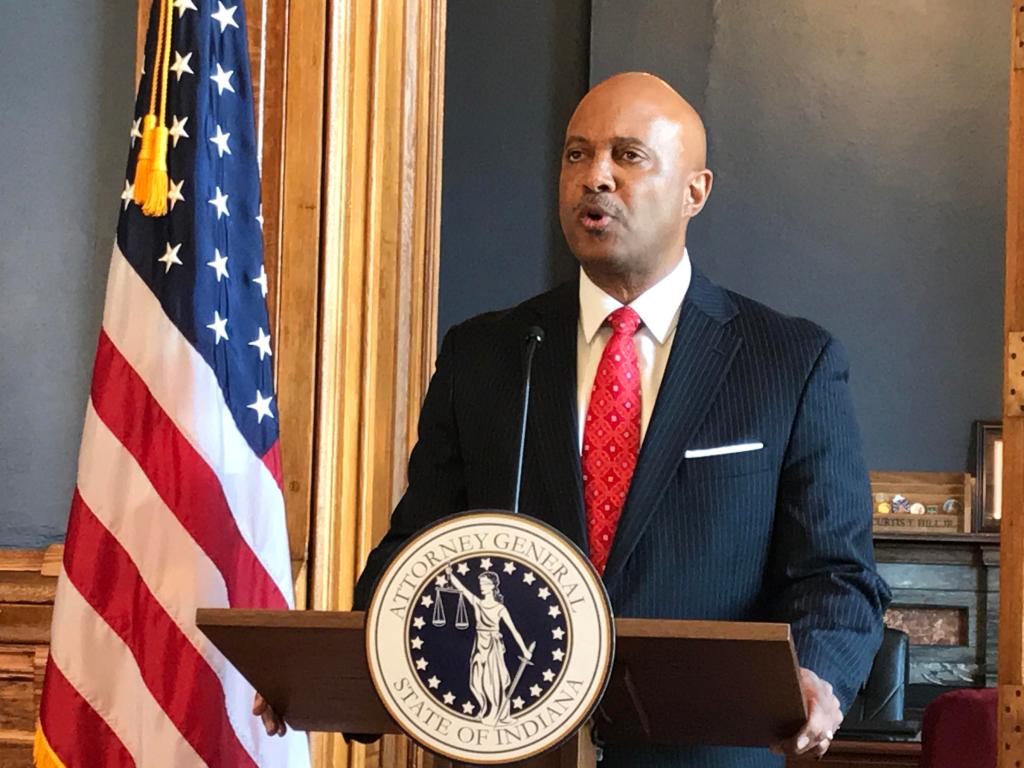
The Future of Attorney General Curtis Hill

As sine die is approaching on Indiana’s 2020 legislative session one bill that will receive much of the attention is Senate Bill 178, which will leave the future of Curtis Hill, Indiana’s Attorney General, up in the air. Senate Bill 178, titled Various Election Matters, authored by Senator Greg Walker includes an amendment that could bar the incumbent Attorney General from running for reelection.

Indiana Attorney General, Curtis Hill. Slodysko, Brian. (Jul, 2018). Indiana attorney general says groping allegations are false. Retrieved from https://apnews.com/8827a4674b1340fea9869645a0109eba/Indiana-attorney-general-says-groping-allegations-are-false

Attorney General Curtis Hill found himself in hot water on sine die in 2018 when he was accused of sexual misconduct. He was accused by four women, one of which was a member of the Indiana House of Representatives, of inappropriately touching them at a sine die party. In a disciplinary case it was proposed that his law license be suspended for 60 days without automatic reinstatement. The Indiana Supreme Court will decide what punishment, if any, Attorney General Hill receives.

Senate Bill 178 originated in the Senate. The bill was originally assigned to the Senate Committee on Elections and passed out with a vote of 7 yeas to 0 nays. The bill went on to pass out of the Senate with a vote of 47 yeas to 0 nays. The Attorney General language was not in the bill as it passed out of the Senate. The bill went over to the House of Representatives where it was assigned to the Committee on Election and Apportionment where it passed out with a vote of 8 yeas to 2 nays. On second reading, when the bill can be amended in front of the full chamber, Representative Wesco added an amendment that stated; if a candidate for the office of Attorney General has been disbarred in Indiana or suspended from the practice of law in Indiana for 30 or more days in the period of five years before taking office they will not be eligible to run, it also stated if the individual holds the office of the Attorney General and is either disbarred or suspended for 30 or more days the individual will forfeit the office and a vacancy in the office will exist. It should be noted that Representative Wesco is a vocal supporter of a primary opponent of Attorney General Hill, John Westercamp. The amendment passed in the House with a vote of 84 yeas to 9 nays. The bill went on to pass the House in a final vote of 83 yeas to 13 nays.

This amendment was added purely for political reasons in the House of Representatives. It is no secret that Attorney General Hill is not liked by many Indiana establishment Republicans. It is no wonder that they want to make sure that this will result in him losing his office either by a future punishment or at the convention. Attorney General Hill has the most statewide votes in Indiana election history. There will be many voters that see this as taking away their vote. This could be damaging politically to Republicans that vote in favor of this bill. In no way am I saying I support the Attorney General, but I believe that this should be left up to the delegates at the convention whether they want Attorney General Hill running for reelection.

The discussion now is in the Senate on whether or not they will approve the bill with the Attorney General language in it. It will be interesting to see as the end is near for session.

Update: The bill failed to make it out of conference committee and died. Attorney General Hill had his law license suspended for 30 days with automatic reinstatement.

Electoral College: Explained and Defended

The electoral college is one of the most misunderstood institutions in the American political process. There is confusion as to what it is and why it exists. I want to spend some time trying to explain how it works and why we have it.

First, I want to discuss what the electoral college actually is. When you cast your vote for President of the United States you are not directly voting for the candidate. You are voting for a group of electors that will represent your state. The number of electors are decided based on the number of Representatives your state has in the House of Representatives plus two for the number of Senators. Each state will have two sets of electors heading into the election, there will be a Republican group of electors and a Democrat group of electors. The party of the candidate for President that wins the state will get to send their group of electors to compose the entirety of the electoral college. The electors are winner take all, meaning that if a candidate wins a state in the election then all of the electoral votes are pledged to them. The electors meet on the 1st Monday after the 2nd Wednesday in December to cast their votes for President and Vice President. There is a possibility the an elector does not vote in the manner that their state voted. This rarely happens and has never changed the outcome of an election (Zachery 2020).

I now want to spend time going over arguments against the electoral college and defenses to those arguments. There are four arguments against the electoral college that I will try to defend: the electoral college acts against democracy, it creates a disparity in representation, electors are unfairly chosen by the states, and it encourages campaigns to ignore large parts of the country. 

Opponents of the electoral college will argue that it acts against direct democracy (Diana). I think I have made my point that the United States was never supposed to be a direct democracy. The United States is a democratic republic. The electoral college helps to acknowledge that this is the UNITED STATES of America. There are 50 different states with 50 different wills. The House of Representatives is meant to be our direct tie to Washington. The framers of the Constitution wanted states to decide who would represent them as President of the United States. Tying my vote in Indiana to another vote in California almost eliminates the need for states. We were never supposed to directly elect the Senate and we were never supposed to directly elect the President. There are a plethora of reasons as to why we vote in the way that we do, which I will touch on when I write about federalism. Just know, the argument that the electoral college acts against direct democracy totally misses the foundation of the American system (Guelzo 2018).

The electoral college sets up a disparity in representation (Diana). That is said of states such as Wyoming whose population is less than 750,000 which is needed for a House seat. They still get the one House seat solely based on Constitutional rules. The electoral college is beneficial for the fact that it includes the two Senators from each state for allotment. The Senate was created for smaller states to have a voice, and it is right to include that idea in the way we choose the executive (Wallison 2016). I see smaller states that have one electoral vote based on their House of Representative seat and two based on their Senate seats as having a say just as the framers intended. There is the idea that you can lower the population threshold for a House seat to a population of 100,000. That would make the House a body of over 3,000 members, which makes that idea insane. Opponents of the electoral college argue for one person one vote. As stated previously that almost eliminates the need for states. 

There is an argument that electors are unfairly chosen by the states (Diana). This is foolish. Electors are chosen by the political parties and are to execute the will of the state and the way the state voted. The Constitution does not really lay out exactly who can be electors, so the idea that they are unfairly chosen is a stretch. This argument doesn’t account for the fact that states run their own elections. Elections are ran on a state by state basis. Eliminating the electoral college eliminates the need for the states to run their own elections. Elections are one of the only areas left that states still have control over, which includes states being able to choose the manner in which they appoint their own electors. Encroaching on this power by the federal government will be a first step to eliminating states all together as having only the federal government.

Finally, the electoral college encourages campaigns to ignore large parts of the county. Opponents will argue that campaigns will only focus on the swing states (Diana). They ignore the fact that swing states change throughout the years. This allows every state to have their time in the spotlight. In a popular vote, large portions of the county would be ignored as well during a campaign cycle. The difference is that in a popular vote it will be the same places ignored every cycle. In the electoral college, every vote in a swing state will matter. That leads to whole states that get attention and not a few cities (Posner 2012)

I believe the arguments I have made for the electoral college and the defenses that I have given for the electoral college should stand up against scrutiny. There are other points I could go into such as the electoral college making an election legitimate or the electoral college being built upon racism. If you have questions about these things I will be happy to answer, but for now I think I covered the bases. The electoral college is of course not without flaws. The United States was built on the idea that you can’t build a perfect nation and that it won’t work for everyone. The electoral college does provide for every state to get their say. I will dive into this more when I write about federalism.

Sources

Guelzo, Allen. (2018). In Defense of the Electoral College. Retrieved from https://www.nationalaffairs.com/publications/detail/in-defense-of-the-electoral-college

Pope. Diana. (n.a.). The Best Arguments Against the Electoral College. Retrieved from https://www.freshu.io/diana-pope/the-best-arguments-against-the-electoral-college

Posner, Richard. (2012, Nov). In Defense of the Electoral College
Five reasons to keep our despised method of choosing the president. 
Retrieved from  https://slate.com/news-and-politics/2012/11/defending-the-electoral-college.html

Wallison, Peter. (2016, Dec). Why We Need the Electoral College. Retrieved from https://www.realclearpolitics.com/articles/2016/12/06/why_we_need_the_electoral_college_132499.html

Wolf, Zachary. (2020, Mar). The Electoral College, explained. Retrieved from https://www.cnn.com/2020/03/01/politics/what-is-electoral-college-history-explained/index.html

Keep Socialism in the Trash Where it Belongs

The governmental system of socialism has been tried and failed before. It has actually failed every single time it has been implemented. What makes younger Americans believe that it will work now? It has been found that 57% of Democrats and 51% of those ages 19-29 have a positive view of Socialism (Boaz 2018). That is almost on par with those that have a favorable view of capitalism. Those numbers should scare you.

Those in politics that have been pushed to the forefront, such as Senator Bernie Sanders and Congresswoman Alexandria Ocasio-Cortez, are a major reason there has been a resurgence of the support for socialism. The problem you will run into is the fact that these politicians in support of socialism are not willing to tell the entire story. They may be able too, so at the very least they choose to ignore the past of socialism. I will be going into what socialism is, the past of socialism, and why we don’t want it in America.

I would like to discuss the idea of a corrupted human nature before I jump into the weeds of socialism. It is no surprise that those individuals that don’t believe in a God believe that we can perfect socialism. These individuals do not believe in a corrupted human nature from birth. Therefore, it makes sense logically to them that we can perfect socialism by having good people. As Christians, socialism should be our worst nightmare. Socialism wants to stomp out any resemblance of anything that suggests there can be evil and corruption. When you admit that people in the system can be corrupted, then the system as a whole can be corrupted. If you acknowledge that one fact, the idea of socialism starts to fall apart. The whole idea of socialism is everyone gives and everyone gets. In reality, socialism helps to breed corruption. “In most cases, socialism’s monopoly on economic control also fomented corruption by government officials, as was especially apparent in Latin American and African socialist regimes” (Calomiris). Not only corruption, but “socialism produced mass starvation in eastern Europe and China, as it undermined the ability of farmers to grow and market their crops. In less extreme incarnations, such as the UK in the decades after World War II and before Margaret Thatcher, it stunted growth” (Calomiris). These don’t seem like things that can even be improved upon, and there are those that argue that socialism can be perfected.

There will be those that argue that socialism may be bad, but capitalism is worse. Many don’t even really know the difference. Socialism is an economic and political system in which the government controls all means of production, whereas capitalism is an economic and political system in which property, business, and industry are owned by private individuals and not by the state. The goal of socialism is economic and social equality through redistribution of wealth. The goal of capitalism is to create wealth through private ownership of property and businesses (Student Daily News). “The difference is that in market-based systems (capitalism) taxation is regarded as an unfortunate burden, which is employed out of necessity to ensure that other priorities are achieved. In contrast, in socialist regimes (socialism), taxation is not regarded as an undesirable consequence, but as a means to prevent individuals from counter-productively controlling their collective economic destiny” (Calimiris). It comes down to the fact that in socialism the central government tries to protect the population from itself. Capitalism builds off the idea that people can choose their own destiny, whereas socialism is the idea that individuals can’t choose their own destiny, and the government can’t let you do too much or you are taking away from others.

There has been a long past of socialism. There was even a form of socialism that was explained in the Bible in the book of Acts. The common thread is every time the system failed. There is a book authored by Robert Lawson of Southern Methodist University and Benjamin Powell of Texas Tech University in which they delve into the past of socialism and what it has accomplished (Henderson 2019). In their book they have chapters such as, “Starving Socialism: Venezuela,” “Subsistence Socialism: Cuba,” “Dark Socialism: North Korea,” “Fake Socialism: China,” “Hungover Socialism: Russia & Ukraine,” “New Capitalism: Georgia,” and “Conclusion: Back in the USSA” (Henderson 2019). I will not go into each case and you can get a better understanding by going to the article that is referenced. The understanding is that socialism always fails. Even the one outlier, China, relies on the free market almost as much as America. There will also be those, such as Bernie Sanders, that point to counties such as Sweden as a template of what America will be like. Sweden will be the first to tell you that they are not socialist. They have a robust safety net that is propped up by a free-market economy. The idea that America needs a revolution, which is what Bernie Sanders is calling for, is just flat out wrong. We can have a discussion whether or not to increase out safety net by raising taxes, but the idea that we should become socialist is insane.

The final issue I want to touch on is how America would look under socialism and how much things could change. The idea of socialism is that the government takes control of every industry and utility. That means they control all the energy, telecommunications, transportation, and food industries. The government will control everything you can think of. If you are someone who is innovative, the idea of government taking control of what you do is crushing. If America was a socialist county would people like Steve Jobs, Jeff Bezos, Mark Zuckerberg, and Bill Gates want to do what they do if it means losing control to the government (Ozimek). There is the fact that with all this money the government can just provide all this innovation. They can use their resources to be innovative. The problem is; what stops people such as the Gates of the world from moving to a non-socialist county to start their business? Why would people want to stay and help America when they can actually make a profit off of their ideas? This will turn America into a Russia or China who are behind when it comes to these technologies, because these countries have to wait and have to play catch up. America on the other hand is leading the pack when it comes to innovative technologies. America leads the pack on environmental technologies, health technologies, telecommunication technologies, and in many other areas. This is the direct result of the free-market capitalist system that America has built. That is why the world looks to America.

In the battle between socialism and capitalism there is an obvious winner. Capitalism helps to build wealth throughout the world, whereas socialism helps to destroy and halt the creation of wealth. The evidence that is there can’t be refuted. If you doubt this keep in mind that people that are in these socialist societies flee to America (James 2018). There is no one that will flee towards socialism. When deciding whether you are for or against socialism, just think about whether you want to control your life or the government?

Sources

Boaz, David. (2018, Oct 25). Young People like ‘Socialism,’ but Do They Know What It Is?. Retrieved from https://www.cato.org/publications/commentary/young-people-socialism-do-they-know-what-it

Calomiris, Charles. (2018, Nov 14). Socialism: The Opiate of the Corrupt and Ignorant. Retrieved from https://economics21.org/socialism-opiate-corrupt-and-ignorant-calomiris

Henderson, David. (2019, Aug 7). Socialism Has Failed. Period. Retrieved from https://www.hoover.org/research/socialism-has-failed-period

James, Kay. (2018, Oct 26). Socialism vs. Capitalism: One Clear Winner. Retrived from https://www.heritage.org/international-economies/commentary/socialism-vs-capitalism-one-clear-winner

Ozimek, Adam. (2017, Feb 12). Socialism Is Bad. Retrieved from https://www.forbes.com/sites/modeledbehavior/2017/02/12/socialism-is-bad/#686fc8c83d79

Student News Daily (n.d.). Socialism vs Capitalism. Retrieved from https://www.studentnewsdaily.com/socialism-vs-capitalism/

Happy Valentine’s Day, Henry!

            It’s been a couple of weeks since I’ve written a Pawlitics post! I’ve been working hard on getting background research for my project done, as well as filling out the proper forms to file for my IRB. I need the IRB information before I can begin doing any interviews or other primary research. Please stay tuned and bear with me as I am getting that stuff taken care of!

For a quick update, this week is Valentine’s Day! This past weekend, I convinced Kegan to decorate sugar cookies with me. We had pink, purple, and red icing and lots of different types of sprinkles. Kegan was actually pretty good at decorating (and I think he had at least a little fun.

I had a schnauzer cookie cutter I got a few years back. I got it because it was a dog. And you know, I like dogs. While getting out cookie cutters for our Valentine’s Day cookies, I found the schnauzer cookie cutter. I told Kegan it looked like Henry Holcomb, who is the First Dog of Indiana. Thus, we decided to decorate Henry Holcomb cookies, and I for one thought they were pretty darn cute.

Henry was one of the first political dogs I really cared about, so it was fitting to decorate a few Henry cookies.

Henry, we hope you have a happy Valentine’s Day!